
At the intersection of biotechnology and space manufacturing, LambdaVision recently closed a $7 million seed funding round to accelerate development and space-based manufacturing of its protein-based artificial retina. This injection of capital, led by Seven Seven Six and Aurelia Foundry Fund, with participation from Seraphim Space, extends the company’s operational runway into 2027 and underpins plans to scale production of next-generation vision-restoring implants in low Earth orbit.
LambdaVision is pioneering an unconventional approach to treating retinal degenerative diseases such as retinitis pigmentosa and age-related macular degeneration, conditions that collectively afflict millions of people worldwide and often lead to irreversible vision loss.
Traditional therapies have focused on slowing progression or using electrode-based implants that can be bulky and limited in resolution. In contrast, LambdaVision’s solution is a protein-based artificial retina engineered to mimic the light-sensing function of natural photoreceptor cells.
At the heart of this technology is bacteriorhodopsin, a light-activated protein originally derived from microorganisms. When integrated into a multilayer thin film, bacteriorhodopsin can absorb incoming light and generate the ion gradients necessary to stimulate the surviving neural circuitry in a degenerated retina, offering a potential path to restoring functional sight.
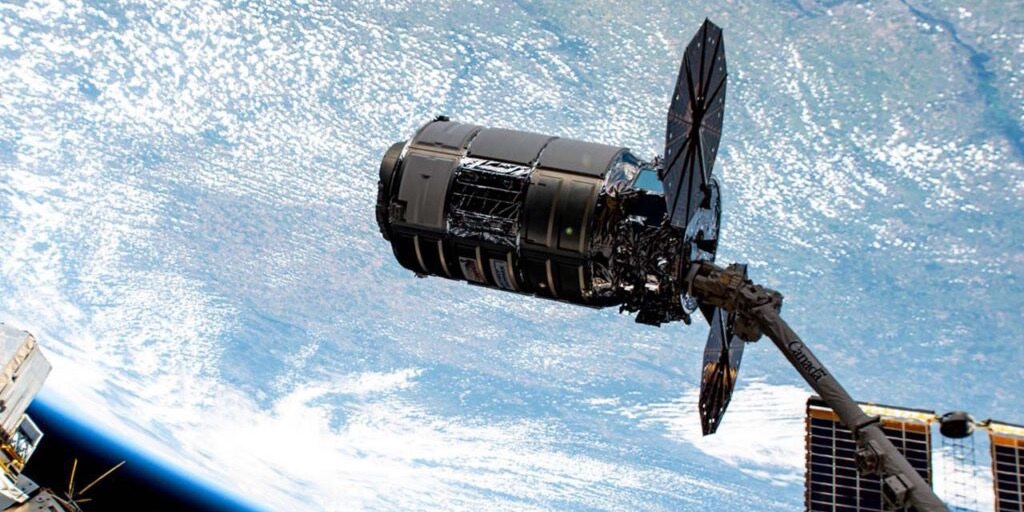
However, fabricating these highly uniform, multi-layered protein films on Earth poses significant challenges. Gravity-induced sedimentation, convection, and other fluid dynamics disrupt the precise layering required for optical performance and biocompatibility. To overcome these limitations, LambdaVision has turned to microgravity environments in low Earth orbit, primarily aboard the International Space Station.

Microgravity fundamentally alters fluid behavior, minimizing sedimentation and enabling the layer-by-layer assembly of ultra-uniform protein films that are difficult to achieve terrestrially. In repeated ISS missions, LambdaVision has produced 200-layer protein thin films, providing data on automated space-based manufacturing processes and hardware reproducibility.
Rather than serving as a technology demonstration alone, orbit-based manufacturing represents a scientifically grounded strategy to exploit the unique physical conditions of space to improve product quality. NASA’s own In Space Production Applications program has awarded a Phase 2 contract to LambdaVision to refine its production methods and build scalability into its low Earth orbit manufacturing pipeline.
From a technology perspective, LambdaVision’s progress underscores an emerging paradigm where space is not just for exploration but for advanced manufacturing. Rarefied environments like microgravity offer distinct advantages for assembling complex biological materials, and the work with artificial retinas could be a harbinger for other space-enabled biomedical products.
Whether such orbit-based manufacturing can be scaled economically and integrated into regulated medical supply chains remains an open question, particularly as clinical validation and regulatory approval still lie ahead. However, early success in producing high-quality protein films in orbit could lay the groundwork for larger classes of therapeutics that are otherwise constrained by Earth’s gravity.
The newly raised funds will support continued refinement of manufacturing techniques, preclinical development, and preparation for clinical trials, a key step toward bringing a novel treatment to patients suffering from vision loss. As with many space-based biotech ventures, the company is proving that orbit can be a laboratory, a factory, and a launchpad for innovations that directly benefit human health on Earth.
In doing so, LambdaVision is illustrating how a future in which the confluence of space technology and biology opens new frontiers for medicine, moving concepts long confined to theory into experimentally testable systems with measurable outcomes.


FTC: We use income earning auto affiliate links. More.


Comments