
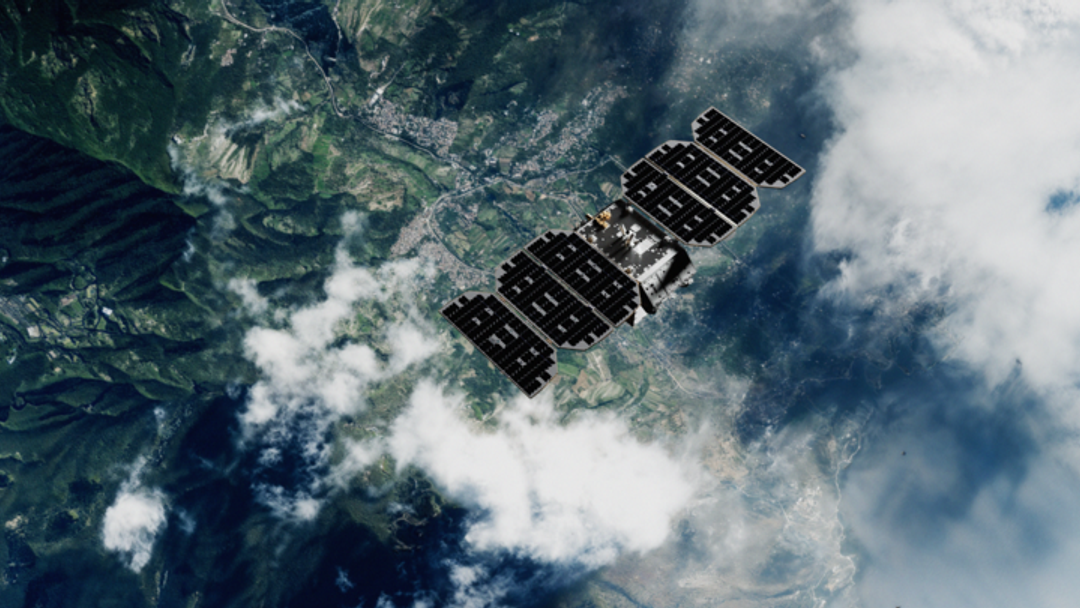
When Planet and Google confirmed their collaboration on orbital data centers, the announcement landed quietly, but its implications reach beyond a single partnership. Planet, best known for operating the world’s largest fleet of Earth-imaging satellites, is now working with Google on a research effort that examines whether computing infrastructure typically housed on Earth can function in orbit.
The collaboration is tied to Google’s Project Suncatcher, an initiative exploring the feasibility of operating data-center-style systems – particularly those supporting artificial intelligence workloads – using near-continuous solar power in space. Google outlined the concept publicly in late 2025, describing small prototype satellites designed to test power generation, thermal management, radiation exposure, and communications latency in orbit.
Planet’s role in the effort reflects its experience operating satellite constellations at scale. Over the past decade, the company has demonstrated that large numbers of relatively small satellites can function as a coordinated system, delivering daily global imagery through cloud-based pipelines. Under Project Suncatcher, Planet is expected to build and help deploy two demonstration spacecraft targeted for launch around 2027, drawing on its small-satellite manufacturing capabilities and operational expertise. The shift from imaging the Earth to hosting compute hardware represents a change in application, not necessarily in architecture: both rely on persistent platforms operating continuously in low Earth orbit.
The collaboration arrives amid broader discussion about how future space activity may extend beyond exploration toward sustained operations. Concepts such as orbital data centers are increasingly framed in the context of long-duration activity beyond Earth’s surface, where power generation, thermal control, and data handling must function independently of terrestrial systems.
Data centers supporting artificial-intelligence workloads have become increasingly energy-intensive on Earth, placing strain on electrical grids and cooling infrastructure across the technology sector. In orbit, solar power availability and the ability to radiate heat directly into space present different engineering conditions, though cost, reliability, and maintenance remain unresolved questions.
The timing of Project Suncatcher coincides with several major spaceflight milestones expected in 2026 that underscore a broader emphasis on infrastructure rather than singular missions. NASA’s Artemis 2, scheduled for no earlier than February 2026, is set to send astronauts around the Moon for the first time since the Apollo era, marking a return to human operations beyond low Earth orbit. At the same time, SpaceX’s Starship is expected to continue orbital and propellant-transfer demonstrations that are widely viewed as prerequisites for assembling large systems in space. Blue Origin’s New Glenn is also entering operational service, expanding the number of vehicles capable of lifting large payloads needed for orbital platforms.
Within that environment, the Planet-Google effort reflects an early attempt to test how computing systems might operate as part of orbital infrastructure. The stated goal of Project Suncatcher is research rather than deployment, with initial missions intended to gather performance data rather than provide operational services. The work aligns with a growing view of orbit as an operational domain – one that supports communications, observation, and potentially computing alongside human and robotic activity.
Rather than signaling a near-term shift away from Earth-based data centers, the collaboration highlights how space-based platforms are being evaluated for roles beyond their traditional functions. As governments and commercial actors expand activity beyond Earth’s surface, efforts like Project Suncatcher illustrate how infrastructure questions – power, data, and systems integration – are beginning to move into orbit alongside exploration.


FTC: We use income earning auto affiliate links. More.


Comments