
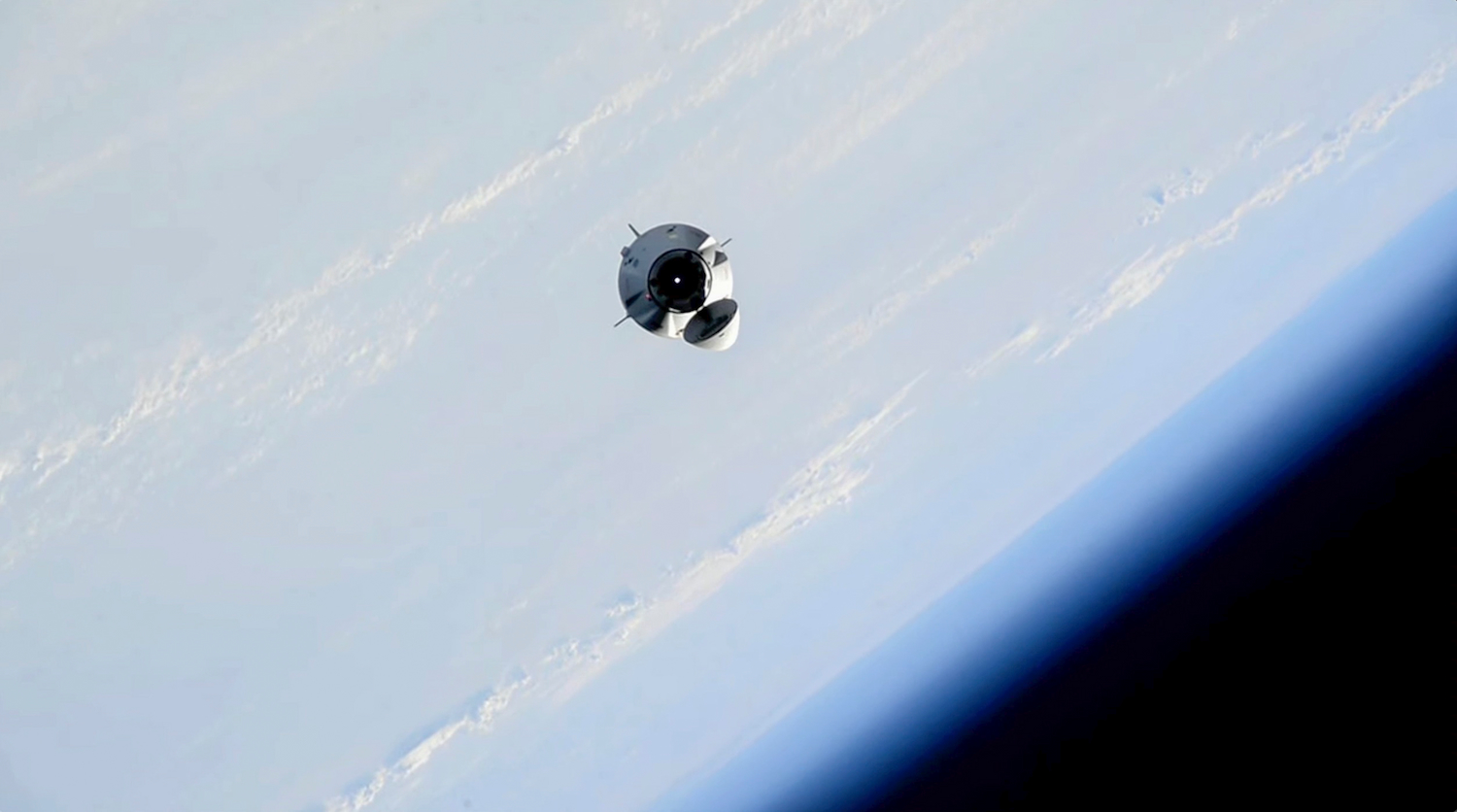
NASA has signed a contract with Vast for the sixth private astronaut mission to the International Space Station, with a launch targeted no earlier than summer 2027. The mission is expected to last up to 14 days in orbit and will fly aboard a SpaceX Falcon 9 rocket and Dragon spacecraft.
Under NASA’s private astronaut mission framework, Vast will propose a crew of up to four individuals for review by NASA and its international partners before entering formal training. While previous private astronaut missions have flown to the ISS, this marks Vast’s first time leading such a mission.
To date, four private astronaut missions have flown to the space station, all by Axiom Space. A fifth, also by Axiom, is planned for early 2027.
The contract with Vast comes as NASA continues its strategy to foster a commercially-led presence in low Earth orbit. With the ISS expected to be retired at the end of the decade, the agency has encouraged private companies to develop independent orbital destinations capable of supporting research and human spaceflight, with NASA positioned as one of many customers.
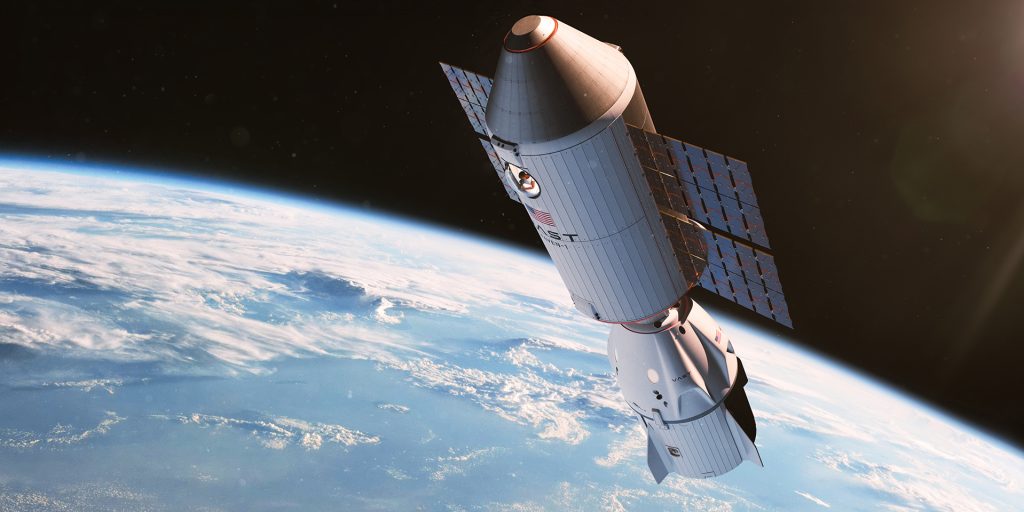
Vast, founded in 2021 and headquartered in Long Beach, California, has positioned itself as one of the newer entrants in that emerging commercial space station market. The company’s roadmap centers on a planned habitat called Haven-1, described as a single-module space station that could operate independently in orbit. It’s currently targeted for launch no earlier than 2027 and is intended to serve both as a private astronaut destination and as a microgravity research platform.
At the heart of Vast’s pitch is science. The company has outlined plans for Haven-1 to include standardized research compartments known as middeck locker equivalent payloads, modular experiment slots similar to those used aboard the ISS. Each slot would support defined mass, power, and data allocations, enabling compact investigations in biotechnology, materials science, and human physiology.
Why microgravity matters
Microgravity research is not simply about floating astronauts. In orbit, gravity-driven effects such as buoyancy, sedimentation, and convection are dramatically reduced. That changes how fluids mix, how crystals form, how flames burn, and even how cells grow.
On Earth, warm air rises and cool air sinks, constantly stirring liquids and gases. In microgravity, those convection currents largely disappear. Scientists can observe more subtle physical processes that are otherwise masked by gravity.
Protein crystals, for example, can grow more uniformly in orbit, potentially helping researchers refine drug design. Studies of combustion in microgravity reveal spherical flame shapes and different soot formation patterns, contributing to improved fire safety models. Materials experiments can examine how alloys solidify without gravity-driven separation of components.
Human biology also behaves differently in orbit. Astronauts experience bone density loss, muscle atrophy, fluid shifts, and changes in immune response. While those effects present challenges for long-duration missions, they also provide researchers with accelerated models of aging, osteoporosis, and cardiovascular adaptation.
For commercial station developers, microgravity research represents both a scientific mission and a potential business model. Pharmaceutical development, advanced materials manufacturing, and biotechnology companies have all expressed interest in orbital research and development, though the economic viability of those efforts remains an open question.
Operational experience as a stepping stone
The upcoming ISS mission offers Vast more than research time. Operating a crewed flight requires integration with NASA’s established human spaceflight infrastructure. That includes safety certification, life-support monitoring, medical contingency planning, crew scheduling, and coordination with flight controllers.
Even a two-week mission must align with the space station’s visiting vehicle docking schedules, power budgets, and data systems. Experiments undergo detailed hazard reviews and must fit within carefully allocated crew time. Participating directly in this environment could provide Vast with operational insight as it develops Haven-1.
Independent habitats must manage environmental control and life-support systems, radiation mitigation, thermal control, communications, and onboard computing without relying on ISS infrastructure. Experience navigating NASA’s human-rating standards and operational processes may inform future design and procedural decisions.
NASA has described these private astronaut missions as part of a broader effort to stimulate commercial activity in low Earth orbit while maintaining safety oversight. For Vast, the 2027 mission represents an opportunity to participate directly in the ecosystem it hopes to help replace.
As the ISS approaches its planned retirement, the outcome of these commercial initiatives may influence how scientific access to microgravity continues into the 2030s, and which companies operate the next generation of orbital laboratories.


FTC: We use income earning auto affiliate links. More.



Comments