
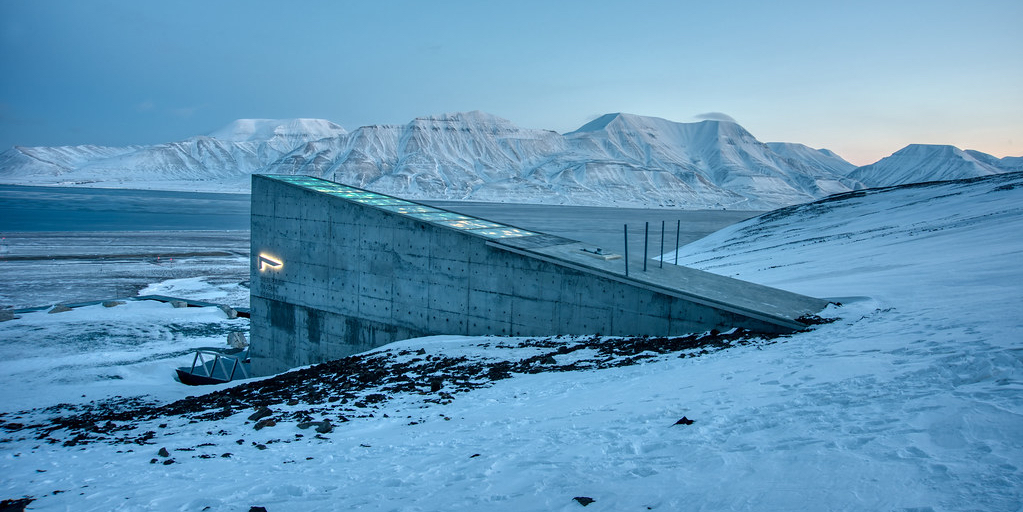
At the edge of the Arctic, buried deep inside a frozen mountain on the Norwegian archipelago of Svalbard, lies one of humanity’s quietest insurance policies. The Svalbard Global Seed Vault stores more than a million seed samples from around the world to form a living archive designed to protect the genetic diversity of Earth’s crops in the event of disaster.
Sometimes called the “doomsday vault,” the facility protects seeds from drought, war, climate change, and other disruptions that could threaten global food supplies. By preserving these genetic blueprints in the Arctic permafrost, scientists aim to provide strategic redundancy for humanity to replant and rebuild agriculture if regional seed banks are lost.
It is, quite literally, a backup for civilization. Yet the mission of safeguarding life does not stop on Earth. The same question – how to preserve the foundations of human survival – is now extending beyond our planet.
While seeds rest inside the frozen vault beneath the Arctic ice, researchers are simultaneously exploring how plants might sustain humanity beyond our home planet. Experiments aboard the International Space Station have already demonstrated that crops can grow in microgravity.
Investigations such as Veggie and the Advanced Plant Habitat, operated by NASA, have successfully grown lettuce, zinnias, radishes, and other crops in orbit. Scientists use these studies to understand how roots, light, and nutrients behave in microgravity.
These experiments are more than scientific curiosities. They are the first steps toward sustainable food systems for future missions to the Moon and Mars.
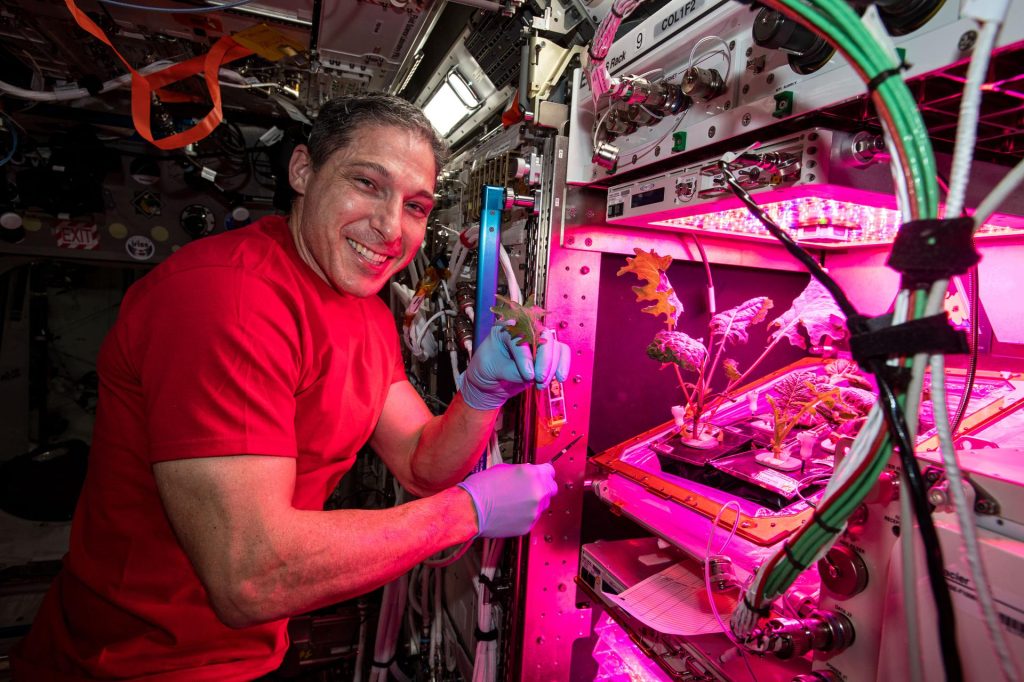
As NASA prepares for long-duration deep space exploration through the Artemis program, researchers are studying how plants could sustain astronauts far from Earth. Microgreens, leafy vegetables, and other fast-growing crops could provide both nutrition and psychological benefits for crews spending months or years away from the planet.
Plants also help recycle air and water, making them valuable components of closed life-support systems that spacecraft and planetary habitats will rely on. In other words, seeds are not only a record of our past on Earth, but a key to our future beyond it.
Standing at the Seed Vault in the high Arctic, that connection becomes strikingly clear. Inside the mountain lie the genetic building blocks of Earth’s agriculture. Above the planet, scientists and engineers are developing ways to grow those same plants in orbit and on other worlds.
One effort preserves life here. The other prepares us to carry life elsewhere. Both are acts of foresight. Both are expressions of the same human instinct: to protect what sustains us.
In the end, the story of seeds, whether frozen beneath Arctic rock or sprouting aboard a space station, is really a story about humanity itself.
As we look outward to the Moon, Mars, and beyond, the lesson of the Seed Vault remains simple and profound. We secure our future not just by exploring new frontiers, but by safeguarding the fragile systems that make life possible in the first place.
Because in the grandest sense, we preserve humanity in two ways: by living here, and by learning how to leave.


FTC: We use income earning auto affiliate links. More.


Comments