
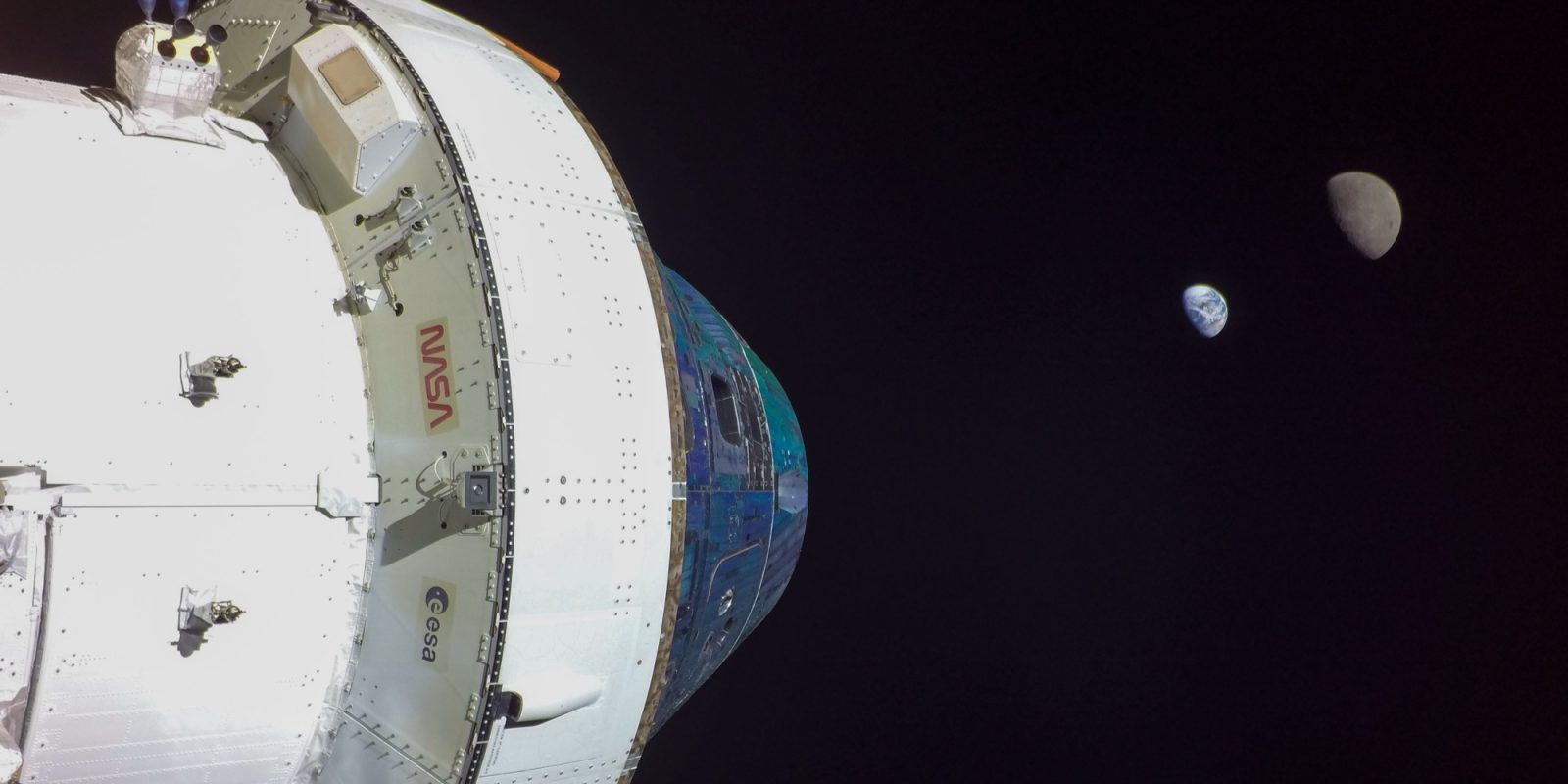
While robotic missions like China’s upcoming Chang’e-7 are expected to map resources and test technologies at the Moon’s south pole, NASA’s Artemis 2 mission represents a different but equally critical pillar of the modern lunar race: the return of humans to deep space beyond low Earth orbit. Scheduled for launch no earlier than February 6, 2026, Artemis 2 will be the first crewed mission of the Artemis program and the first human journey beyond Earth orbit since Apollo 17 in 1972.
Unlike later Artemis missions, Artemis 2 is not a lunar landing. Instead, it is a full-scale systems test of the Orion spacecraft with humans aboard on a deep space flight. The mission is expected to validate the spacecraft, life-support systems, and operational procedures required to safely send astronauts to the Moon and back.
In that sense, Artemis 2 functions as the program’s proving ground – less about destination and more about endurance and reliability.
Mission architecture and objectives
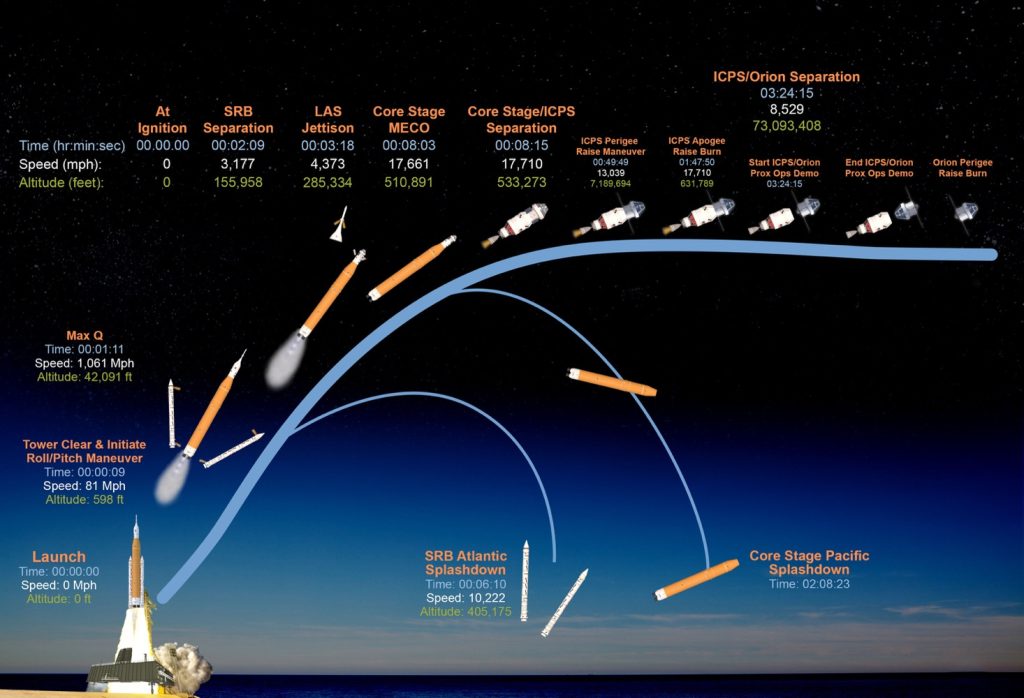
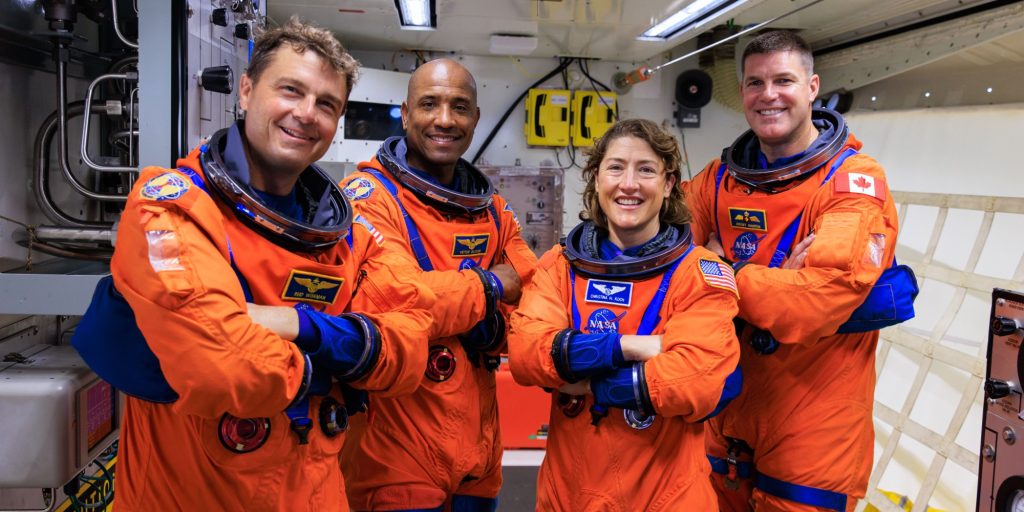
Artemis 2 will launch aboard NASA’s Space Launch System rocket, carrying four astronauts inside the Orion spacecraft. Shortly after launch, the SLS upper stage will place the vehicle into a roughly day-long elliptical high Earth orbit with a low point of about 115 miles and a high point of 46,000 miles.
With the upper stage expended, the Orion spacecraft will separate and the crew will perform a proximity operations demonstration to verify the vehicle’s handling characteristics and propulsion systems. This will be the first time astronauts manually fly Orion, testing human-in-the-loop operations that are critical for future lunar landings and extended missions, which will involve rendezvous and docking a Human Landing System and, in later missions, NASA’s Lunar Gateway space station.
Over the course of the day-long orbit, the crew will also verify communications equipment, life support systems, and other critical systems for a journey into deep space.
Once the spacecraft comes back around to Earth, Orion’s European-built service module will perform a trans-lunar injection burn to place the mission on a free-return trajectory around the Moon. This trajectory allows the spacecraft to return safely without major propulsion burns, a design choice that prioritizes crew safety during early missions.
It will take about four days to reach the Moon. The vehicle and crew will swing around the Moon at a closest approach of around 4,700 miles above the lunar far side. And then it will take about four days to return to Earth. The whole mission is expected to last about 10 days.
From a technical standpoint, Artemis 2 is focused on validating:
- Crewed life-support systems, including air, water, thermal control, and waste management, over a 10-day deep space mission
- Radiation exposure monitoring beyond Earth’s protective magnetosphere
- Navigation and communications at lunar distances
- High-speed Earth reentry, with Orion expected to hit Earth’s atmosphere at nearly 25,000 mph
Why Artemis 2 matters strategically
In the context of the broader space race, Artemis 2 occupies a unique position. While China’s Chang’e missions emphasize robotic precision, resource prospecting, and stepwise infrastructure development, Artemis 2 underscores the United States’ continued commitment to human exploration as a strategic capability.
Sending astronauts around the Moon is not just symbolic. Crewed missions demand far more robust systems than robotic ones: redundancy, fault tolerance, real-time decision-making, and long-duration habitability. Demonstrating these capabilities signals that a country can sustain human operations beyond Earth orbit – an essential prerequisite for permanent lunar presence.
Artemis 2 also reinforces the U.S.-led Artemis Accords, which frame lunar exploration around interoperability, transparency, and shared norms. While the robotic Chang’e missions advances China’s parallel roadmap toward an International Lunar Research Station, Artemis 2 strengthens the political and technical foundations of a competing coalition centered on NASA and its partners.
A bridge mission, not an endpoint
Critically, Artemis 2 is a bridge between decades of low Earth orbit experience aboard the International Space Station and the far more demanding environment of lunar surface operations. Its success will directly influence Artemis 3, which aims to land astronauts near the Moon’s south pole, and subsequent missions intended to establish sustained presence on and around our nearest celestial neighbor.
In contrast to robotic exploration, human spaceflight is slower, costlier, and riskier, but it also enables adaptability and long-term occupation. In the emerging lunar competition, Artemis 2 is less about beating rivals to a location and more about proving the United States can operate humans safely, repeatedly, and responsibly in deep space.
Taken together with missions like China’s Chang’e-7, Artemis 2 illustrates the dual nature of today’s lunar race: one path led by robots mapping and harvesting, the other by humans preparing to return, not for flags and footprints, but for permanence.


FTC: We use income earning auto affiliate links. More.


Comments