
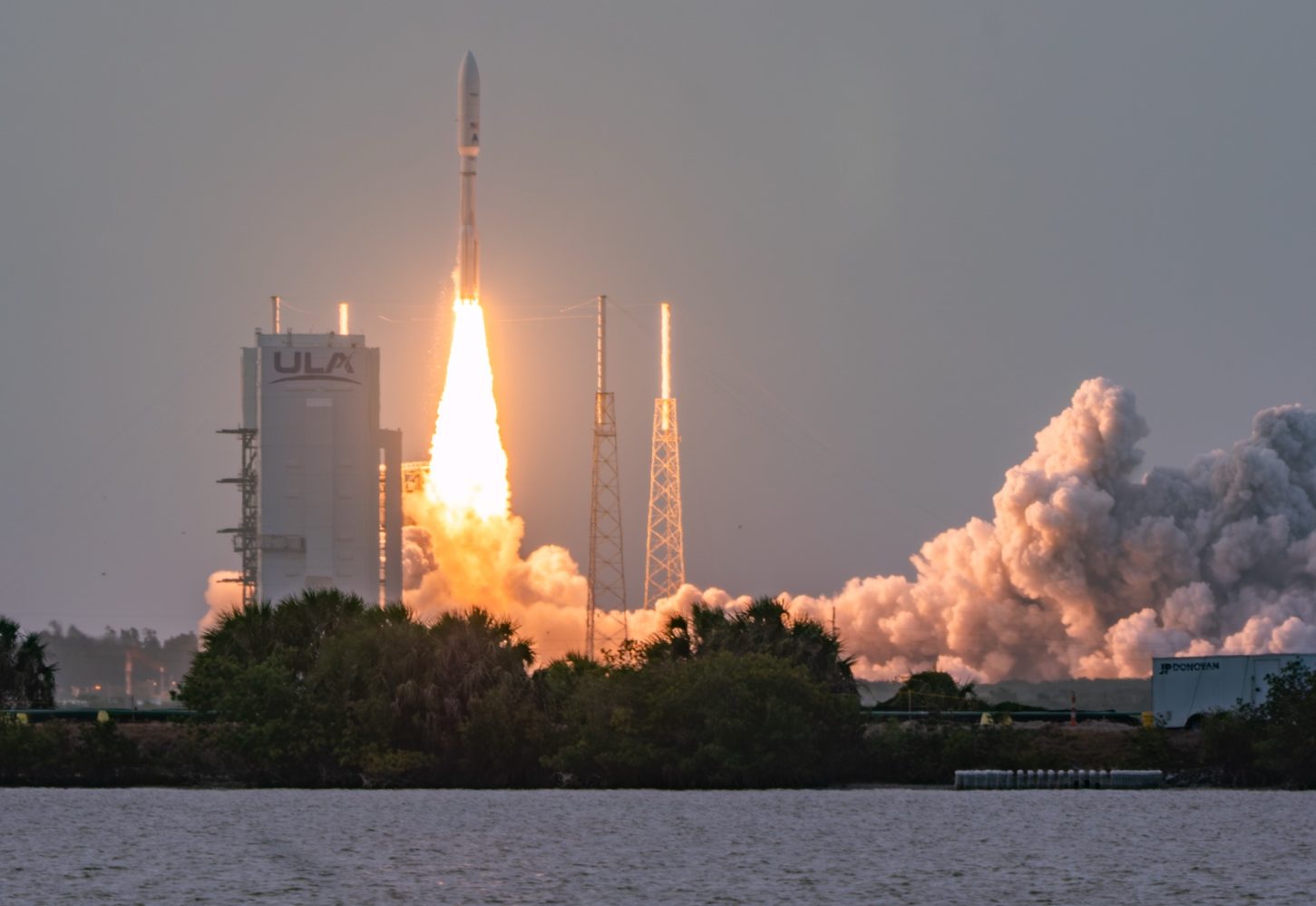
I’m not sure if ULA’s Atlas V ever got this nickname officially, but I’m going to coin it anyway, the “Queen of Space,” which recently hit another milestone towards its retirement: it is down to just two customers for its remaining 11 flights.
Last month, on November 13, ULA launched the ViaSat-3 F2 satellites from Cape Canaveral, Florida. It was nothing special from the ground; just another communication satellite being launched to geostationary orbit to replace an older communication satellite in geostationary orbit. Pretty mundane.
However, this was a milestone launch for the Atlas V, not a good milestone, but a milestone nonetheless. ViaSat-3’s mission was the Atlas V’s final geostationary orbit mission, a launch profile it was specifically designed to do.
This brings the Atlas V down to just two types of launches: six Boeing Starliner missions to the ISS and five Amazon Project Kuiper (now called Amazon LEO) missions to low Earth orbit. After those missions are finished, ULA will officially retire the rocket that has heritage pointing all the way back to America’s space program roots.
The Atlas V will be replaced with ULA’s newer, cheaper, and more capable Vulcan rocket. Vulcan has already launched a few times, and this year gained the Space Force’s approval to fly national security missions for the US government.
ULA’s retirement of the Atlas is still years away. While Amazon plans to use those contracted rockets in the near future, NASA’s use of the Starliner will stretch its missions into the late 2020s, possibly into 2030.


FTC: We use income earning auto affiliate links. More.



Comments