
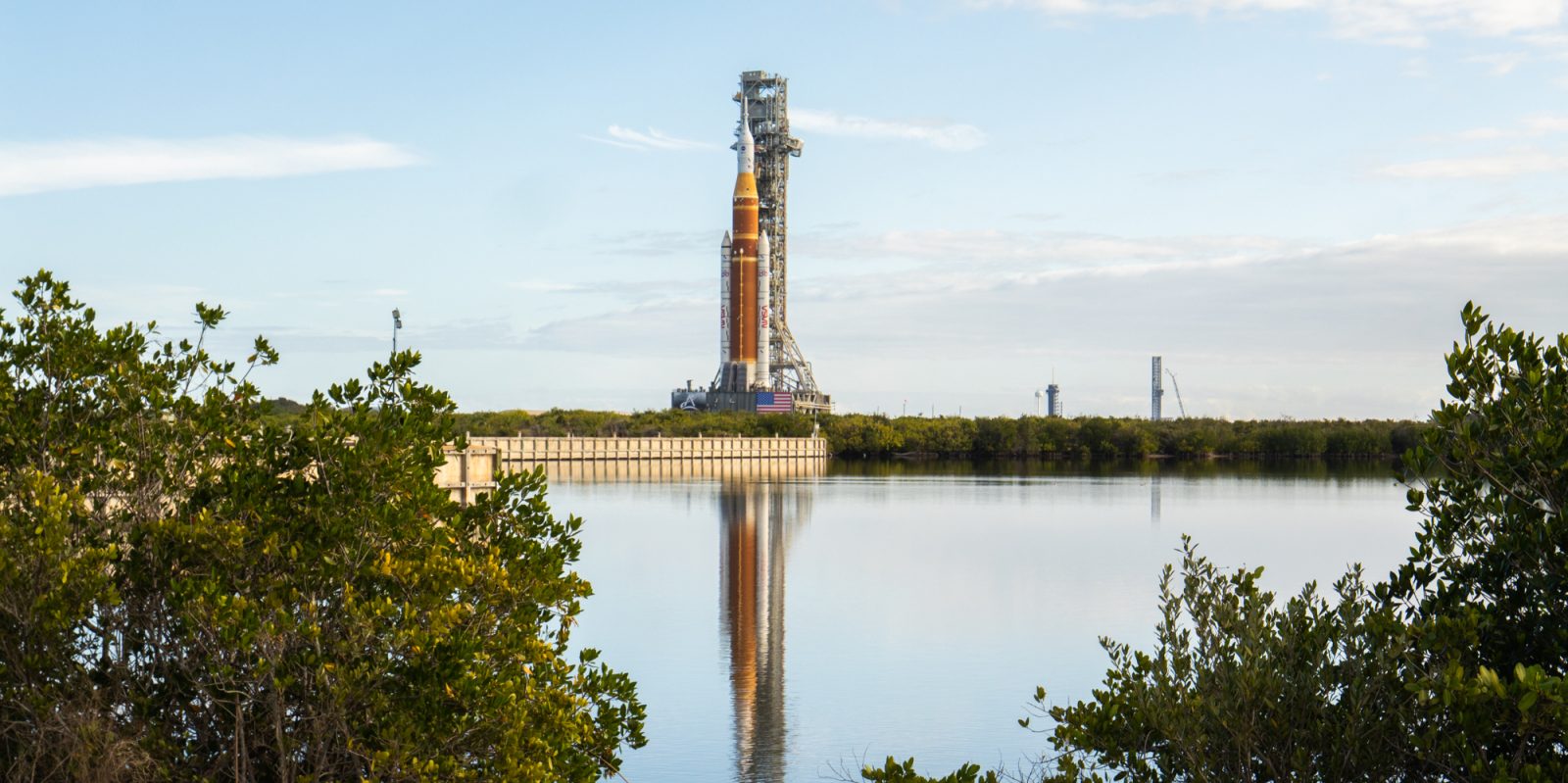
On Thursday, NASA Administrator Jared Isaacman announced changes to the Artemis mission profiles that will lead to at least a one-year delay in returning humans to the lunar surface. However, the agency believes these changes will strengthen the program overall, allowing for faster launch turnarounds and better testing of flight hardware before it’s needed for surface ops.
In a short update, Isaacman announced that Artemis 3 would no longer feature its crew landing on the Moon’s surface. The mission will solely be a test of rendezvousing with either or both of SpaceX‘s HLS Starship and Blue Origin‘s Blue Moon lander.
Artemis 3 will also hopefully test the EVA suits being designed and made by Axiom Space. If the suits are still not ready by Artemis 3, a leading cause of the current mission’s delay, NASA still has opportunities to test the suits on the ISS before they’re needed on the Moon.
The actual return of astronauts to the Moon’s surface will be moved to Artemis 4, set to launch no earlier than 2028. To be more specific, Isaacman wants Artemis 4 to fly 10 months after Artemis 3.
The statement was filled with disappointment in the three years between the flight of Artemis 1 and Artemis 2, and how these long delays will not lead to NASA and Artemis success at the Moon.
The new plan also included Artemis 5, with a potential launch opportunity a few months after Artemis 4 in 2028. However, Isaacman stated the plan is to have a launch opportunity that same year, but does not require them to use it.
While the delay is still what it is, a delay of a major national program that is being pushed hard by both the White House and Congress, NASA sees it as a way to test hardware before it is used on the nation’s most important human spaceflight achievement since Apollo 11.
Space Explored’s Take
The press conference was a breath of fresh air compared to the last decade of “space is hard” taglines throughout the statements. Instead of insisting NASA is perfect, and its program is unflawed, and delays should be accepted, Isaacman and senior NASA civil servants stated clearly that there is a problem and that the agency needs to do better in order for Artemis to succeed.
A delay to Artemis 3 was expected, and even the current timeline to get it flown will be tight. Both Blue Origin and SpaceX have not shown much progress publicly on their HLS prospects, but Isaacman is in full faith that at least one of them will be ready by next year to support Artemis 3.
Will this new Artemis timeline keep the agency better on track? Unsure. If there is one thing you should always expect from NASA and its human exploration programs, it is delays. However, I don’t think anyone would have expected a three-year delay between the first two missions.
There is still the question of what happens after NASA has landed on the Moon, the flag is planted, and Washington begins to care less about the Moon, just like what happened after Apollo 11. While Isaacman shared hope that this new timeline would make that part of NASA more sustainable, increased rocket launches and SLS production mean lower costs per flight; only time will tell if an Artemis lunar base is actually feasible politically.


FTC: We use income earning auto affiliate links. More.



Comments