
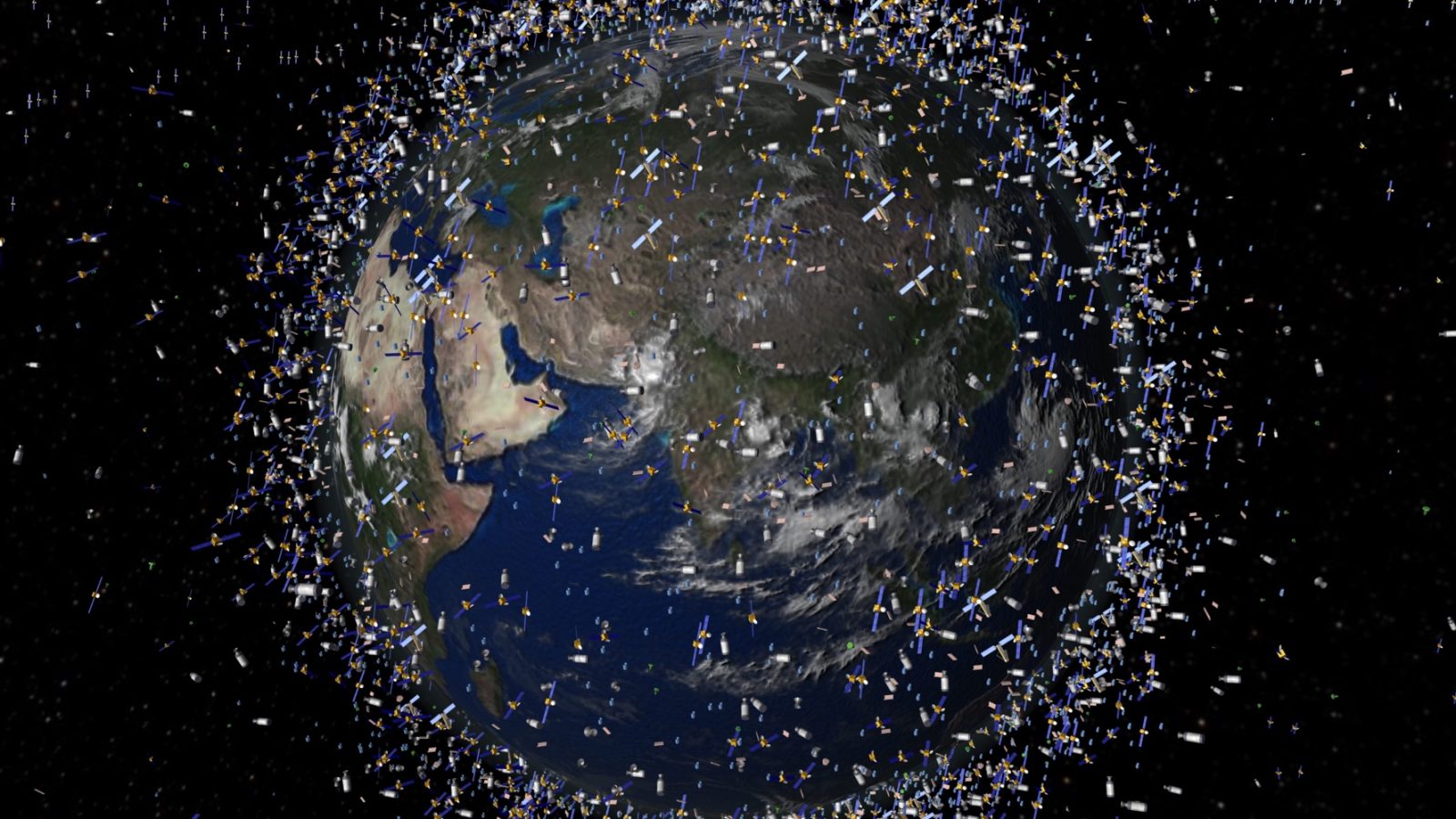
Earth’s orbit is getting more crowded by the week, and NASA is no longer just talking about the problem. It’s working with industry to build the infrastructure to manage it. From its support of the Department of Commerce’s satellite tracking system to a growing roster of commercial partners developing technologies to clean up debris and dodge collisions, the agency’s approach to sustainability has moved from strategy into execution.
When NASA introduced its Space Sustainability Strategy in April 2024, the agency made it clear that space debris was becoming one of the biggest challenges facing the future of spaceflight. Unveiled by then-Deputy Administrator Pam Melroy at the 39th Space Symposium, the strategy laid out NASA’s plan to better understand, track, and reduce the growing amount of debris orbiting Earth.
The strategy focuses on several major goals, beginning with creating a common way to measure and understand space sustainability. NASA wants government agencies, commercial companies, researchers, and international partners to work together using the same basic framework as more spacecraft are launched into orbit.
Another major goal is improving NASA’s ability to predict what is happening in space. That includes tracking debris more accurately, improving space situational awareness, studying new ways to operate safely in orbit, and finding affordable ways to reduce the amount of new debris being created.
NASA also plans to continue investing in technologies that improve debris tracking, collision avoidance, and space traffic coordination. Rather than relying on a single solution, the agency is supporting a variety of technologies that can help keep Earth’s orbit safe as commercial space activity continues to expand.
The strategy also encourages development of active debris removal technologies. Rather than serving as the primary provider of debris-removal services, NASA sees its role as helping develop the technology while commercial companies eventually provide many of those services.
As of mid-2026, that strategy has moved into implementation. One of the biggest steps forward has been NASA’s partnership with the Department of Commerce on the Traffic Coordination System for Space, or TraCSS. The system is designed to help satellite operators avoid collisions by providing improved tracking data and conjunction warnings. As more satellites enter orbit, systems like TraCSS are becoming increasingly important for managing space traffic safely.
NASA has also spent the past two years studying the economics of orbital debris. One conclusion is becoming increasingly clear: preventing debris is much less expensive than cleaning it up later. That research is helping shape future investments in better tracking systems, improved satellite disposal methods, and technologies that reduce collision risks before they become larger problems.
Industry steps in
NASA has made it clear that solving the debris problem will require help from the commercial space industry. LeoLabs, for example, operates a global radar network that tracks satellites and debris in low Earth orbit. Its data helps operators understand where debris is located and avoid potential collisions.
Astroscale is developing technologies that could one day remove large pieces of debris from orbit. The company has already demonstrated spacecraft that can safely approach other satellites and inspect them, an important first step toward future cleanup missions.
Slingshot Aerospace builds software that helps satellite operators visualize the increasingly crowded space environment and predict potential collisions before they happen.
Kayhan Space has developed automated collision avoidance software that allows operators to respond more quickly when satellites are predicted to pass dangerously close to one another.
Privateer Space, founded in part by Apple co-founder Steve Wozniak, has created a platform that combines tracking information into a detailed picture of everything happening in Earth’s orbital environment.
NASA also sees satellite servicing as another way to reduce debris. Northrop Grumman’s Mission Extension Vehicle has shown that older satellites can be refueled or kept operating longer instead of becoming abandoned space junk.
Meanwhile, ClearSpace, working with the European Space Agency, is developing robotic technology capable of capturing and safely removing large pieces of debris from orbit.
Together, these companies represent NASA’s long-term vision. Rather than relying entirely on government programs, NASA is helping build a commercial space economy that includes debris tracking, collision avoidance, satellite servicing, and eventually debris removal.
NASA’s strategy has also faced challenges. Proposed budget cuts to the Office of Space Commerce raised concerns about the future of TraCSS, prompting a coalition of industry groups representing hundreds of space companies to urge Congress to continue funding the program. As satellite constellations continue to grow, many companies now view space traffic management as essential infrastructure.
The need for action continues to grow. In 2024, a close call between NASA’s TIMED spacecraft and the inactive Russian satellite Cosmos 2221, missing each other by less than 10 meters, showed just how crowded Earth’s orbit has become. Near misses like this are becoming more common as thousands of new satellites are launched each year.
The discussion about space sustainability is no longer limited to Earth orbit. On August 5, 2026, a spent SpaceX Falcon 9 upper stage impacted the Moon. The stage was used in January 2025 to send Firefly Aerospace’s Blue Ghost lunar lander and ispace’s HAKUTO-R Mission 2 to the Moon. While the impact was not considered dangerous, it highlights an important point: every mission leaves hardware behind.
Scientists plan to study the impact to learn more about crater formation and how artificial objects interact with the lunar surface. However, the event also raises a bigger question. As NASA’s Artemis program and commercial lunar missions increase, how will future missions safely manage spacecraft and debris around the Moon?
Just as NASA is working to make Earth’s orbit more sustainable today, many experts believe similar planning will eventually be needed throughout the Earth-Moon system as human activity in deep space continues to grow.
NASA’s Space Sustainability Strategy has evolved from a vision into a roadmap that is already shaping the future of spaceflight. Through partnerships with industry, investments in new technology, and closer international cooperation, the agency is working to ensure that space remains safe and usable for future generations.


FTC: We use income earning auto affiliate links. More.



Comments