
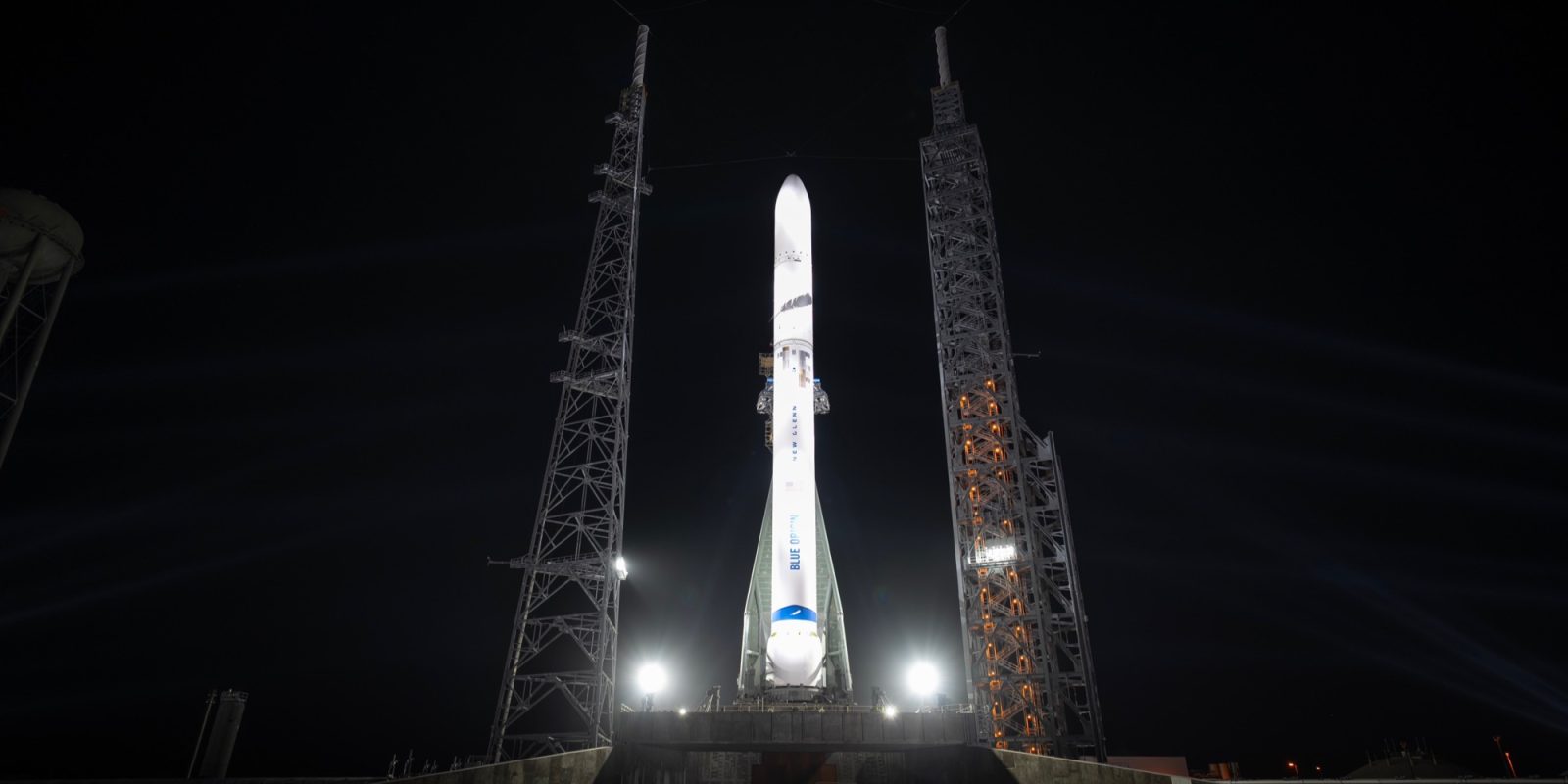
Blue Origin suffered a major blow last month when its New Glenn rocket experienced a catastrophic anomaly during a static fire test at Launch Complex 36 on Florida’s Space Coast. The test was being conducted without its mission payload attached – a batch of Amazon LEO internet satellites that had been scheduled for launch in early June.
Early reports indicate portions of the launch infrastructure sustained substantial damage. The company has not released a detailed damage assessment or timeline for returning the rocket to flight operations. Because the area was cleared for the hotfire test, Blue Origin said all personnel have been accounted for and safe.
“It’s too early to know the root cause but we’re already working to find it,” said company founder Jeff Bezos shortly after the May 28 explosion. “Very rough day, but we’ll rebuild whatever needs rebuilding and get back to flying. It’s worth it.”
The timing could hardly be worse. In the days leading up to the incident, NASA had selected Blue Origin to deliver commercial Lunar Terrain Vehicles developed by Lunar Outpost and Astrolab to the Moon later this decade to be used by future Artemis astronauts. These would have been sent via the company’s Blue Moon Mark 1 lander, which is launched by New Glenn.
Blue Origin is also under contract to deliver NASA’s VIPER rover to the Moon in late 2027. However, the first Mark 1 flight, dubbed “Moon Base 1” by NASA, was anticipated to launch this fall. The explosion now places all of those commitments in jeopardy and raises urgent questions about the stability of NASA’s broader Artemis lunar architecture.
What this means for Artemis
New Glenn is increasingly becoming a critical component of NASA’s plans for sustained lunar operations. The agency selected Blue Origin as one of its Human Landing System providers for the Artemis program, alongside SpaceX’s Starship.
Blue Origin’s Blue Moon lander is being developed to eventually transport astronauts and cargo to the lunar surface as NASA works toward establishing a permanent presence near the Moon’s south pole. First with the smaller Mark 1, and then later with the larger crew-rated Mark 2.
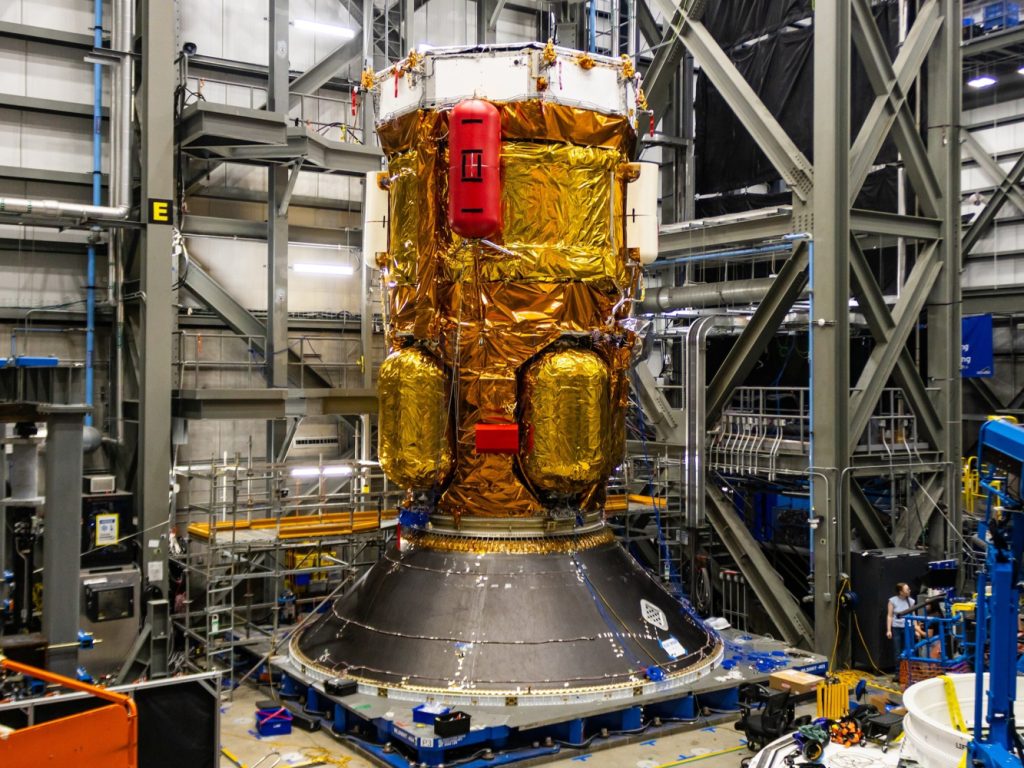
New Glenn was the planned launch vehicle for both lander designs. Because the Blue Moon architecture is optimized for New Glenn, there may not be any straightforward substitute with another launch vehicle without prolonged design modifications. Any disruption to New Glenn operations would therefore ripple across multiple planned lunar cargo and landing missions simultaneously.
In recent weeks, NASA awarded the company additional lunar transportation and infrastructure contracts connected to Artemis surface operations, further cementing Blue Origin’s role within the agency’s evolving Moon strategy.
Several of these missions were already expected to serve as foundational demonstrations for NASA’s long-term lunar infrastructure goals. The upcoming “Moon Base 1” flight of the Blue Moon Mark 1 lander was intended to validate precision landing systems, cargo delivery operations, and surface logistics technologies near the lunar south pole. It was also expected to deliver cameras for a landing plume study and a laser retroreflective array.
Future flights are expected to support Artemis surface mobility efforts and eventual crewed operations.
The company is also preparing a prototype version of its Blue Moon Human Landing System for a demonstration in low Earth orbit by 2027 as part of the crewed Artemis 3 mission. That flight is expected to see astronauts in Orion rendezvous with prototypes of SpaceX’s Lunar Starship and Blue Origin’s Blue Moon, both or whichever is ready in time.
The 2027 mission is set to serve as a validation of docking systems, life support interfaces, and lunar mission operations ahead of future crewed surface flights as early as 2028.
NASA Administrator Jared Isaacman has repeatedly emphasized the importance of commercial partnerships in accelerating lunar development, and Blue Origin appeared firmly embedded within that approach. The explosion could force NASA to reassess its recently announced Moon base development schedule.
Blue Origin has already begun early development of additional launch infrastructure on the Space Coast, including a second New Glenn pad at nearby Launch Complex 36B. But until engineers complete a full assessment of the damage and recovery requirements, the timeline for returning the rocket to flight remains unknown, and with it the timelines for the lunar missions it was meant to support.
A company at a pivotal moment
The explosion arrives at what was supposed to be a transformational period for Blue Origin. For years, the company was often viewed primarily through the lens of suborbital tourism and the highly publicized New Shepard flights that carried celebrities and private citizens to the edge of space. But as of early 2026, the company had appeared to be increasingly focused on something much larger: becoming a central player in NASA’s long-term lunar architecture.
Earlier this year, Blue Origin announced a pause in New Shepard operations in order to focus more heavily on New Glenn and Blue Moon development, a move many analysts viewed as symbolic of the company’s broader transition away from space tourism branding and toward long-duration infrastructure and exploration systems.
That shift is becoming especially visible along Florida’s Space Coast. Following the successful first orbital launch of the massive New Glenn rocket in early 2025, Blue Origin has continued expanding operations near Kennedy Space Center and Cape Canaveral. The company has acquired additional land and infrastructure in the region while steadily increasing hiring tied to launch operations, manufacturing, propulsion systems, and lunar development programs.
The investment signaled Blue Origin was not simply preparing for occasional launches. It was positioning itself for sustained operational cadence. At the same time, the company has shifted resources internally toward lunar systems and large-scale orbital programs.
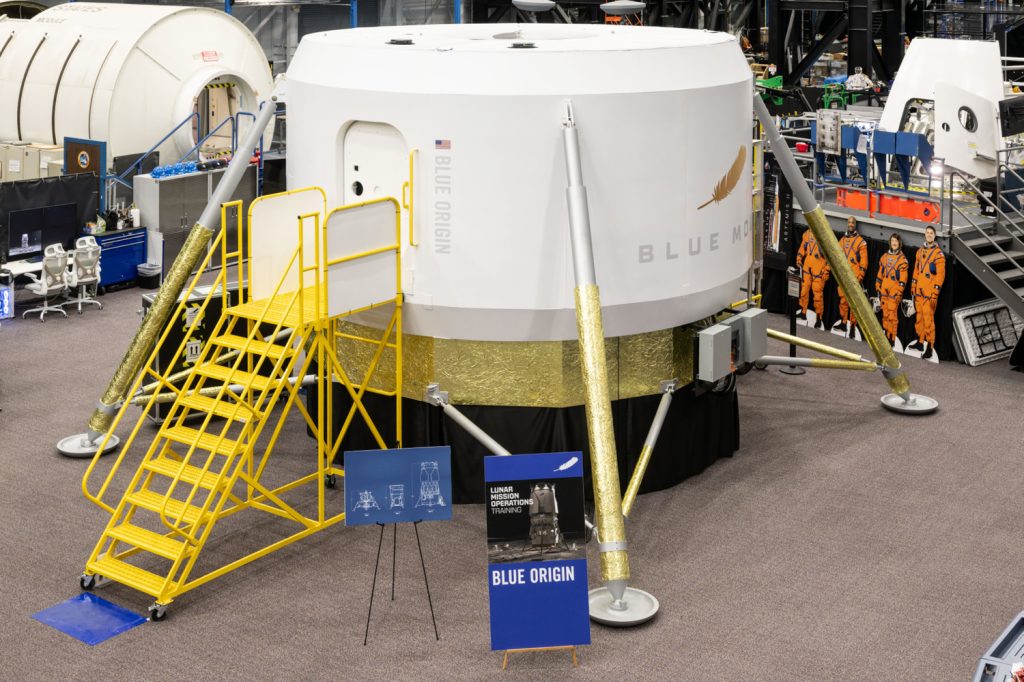
At NASA’s Johnson Space Center in Houston, astronauts have already begun training with a full-scale mockup of Blue Origin’s Blue Moon Mark 2 lunar lander. Testing was also underway on the cargo-focused Blue Moon Mark 1 system, designed to demonstrate precision lunar landing technologies before future crewed missions.
That picture, until this week, had been of a company accelerating.
The rocket at the center of everything
Powered by seven BE-4 engines on its first stage, the 322-foot-tall New Glenn rocket, named after astronaut John Glenn, was designed to compete directly in the heavy-lift launch market while also supporting NASA exploration, commercial payloads, and future deep space logistics. The partially reusable rocket had become the backbone of Blue Origin’s ambitions.
Losing flight capability for months, or longer, while the company investigates the anomaly and rebuilds the destroyed infrastructure not only disrupts NASA contracts, but could also undermine the commercial confidence the company has been carefully building since the first orbital launch.
Blue Origin must now determine the full extent of damage to its launch infrastructure and whether secondary infrastructure was affected. After that comes the longer process of root cause analysis, corrective action, and a return to flight. This is a sequence that could stretch from months to over a year.
NASA’s Artemis plans now extend far beyond isolated lunar landings and is increasingly focused on long-term infrastructure: power systems, mobility vehicles, robotic scouting systems, cargo delivery, and eventually semi-permanent operations near the Moon’s south pole. Blue Origin had appeared intent on becoming part of nearly every layer of that architecture.
Whether that vision survives this setback, intact or revised, depends largely on how quickly and credibly the company can demonstrate it has identified the cause of the anomaly and corrected it.
For now, the explosion serves as a reminder that even as the modern lunar economy accelerates, spaceflight remains an inherently difficult and dangerous endeavor. The coming weeks will reveal how quickly Blue Origin can recover and resume the ambitious plans that have increasingly placed the company at the center of America’s return to deep space.


FTC: We use income earning auto affiliate links. More.



Comments