
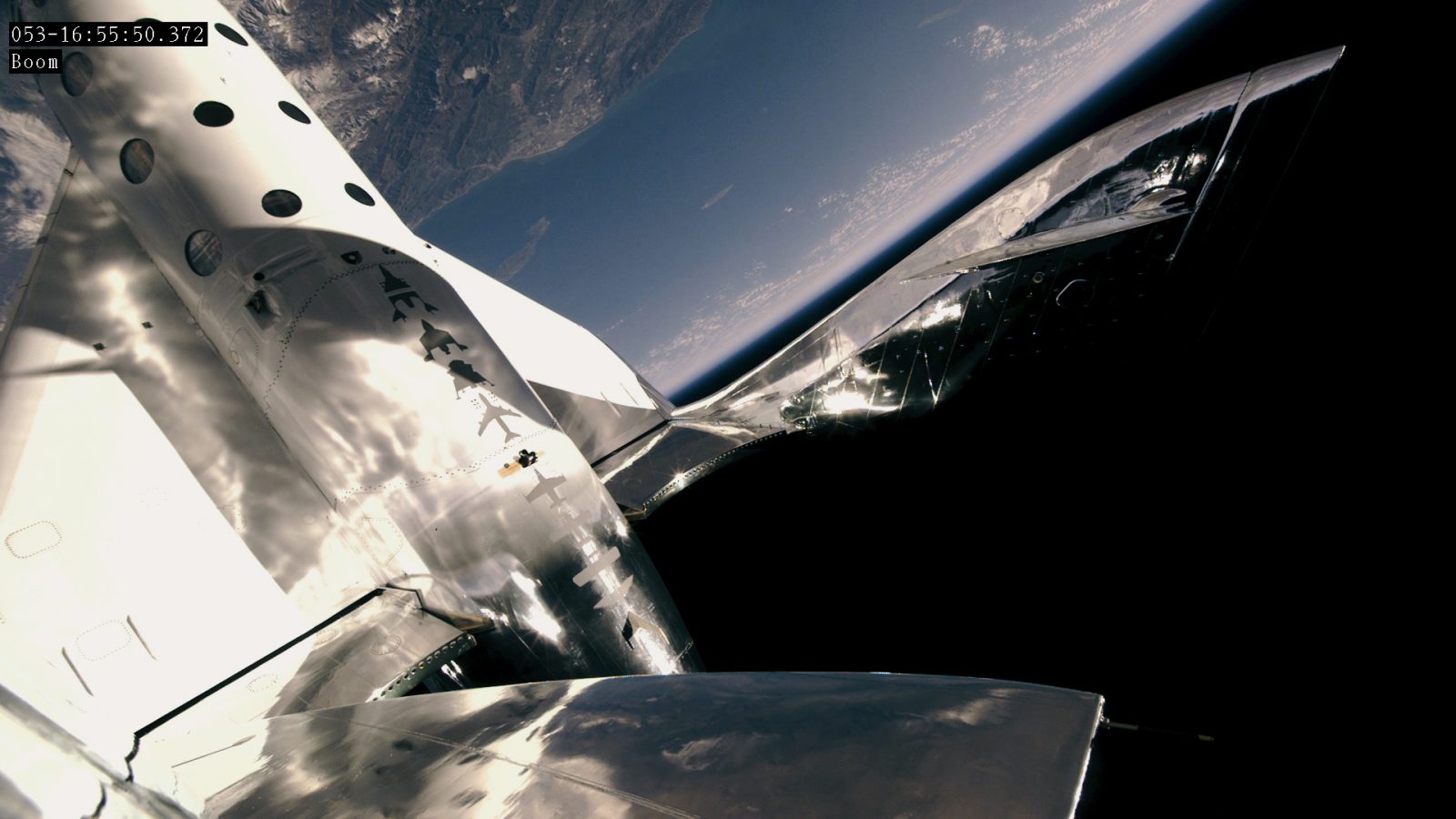
Virgin Galactic has become one of the most intriguing, controversial, and headline-grabbing players in the commercial space industry. Founded in 2004 as part of Richard Branson’s Virgin Group, the company set out to make space tourism a reality by flying paying customers to the edge of space on reusable suborbital spaceplanes. While its journey has been far from smooth, the company is positioning itself for a comeback in 2026 after an extended operational pause.
Headquartered in California, with operational flight activities based out of Spaceport America in New Mexico, Virgin Galactic has taken a unique technical path. Instead of traditional vertical rocket launches like SpaceX or Blue Origin, its suborbital SpaceShipTwo vehicles are carried aloft beneath a large carrier aircraft and then released mid-air to fire rocket engines toward space. The design allows for runway takeoffs and landings, positioning the experience as something closer to an airline operation than a traditional rocket launch.
This design and flight profile traces back to SpaceShipOne, the experimental vehicle developed by Burt Rutan’s team at Scaled Composites. In 2004, that spaceplane became the first privately funded crewed spacecraft to reach space twice within two weeks, capturing the $10 million Ansari X Prize and demonstrating that non-government teams could achieve human spaceflight.
That success directly inspired the formation of Virgin Galactic, with Branson partnering with Rutan to scale the concept into the larger SpaceShipTwo system intended for commercial passengers.
Virgin Galactic’s trajectory has included significant setbacks. In 2014, the first SpaceShipTwo spaceplane, VSS Enterprise, broke apart during a test flight in the Mojave Desert, killing one pilot and seriously injuring another. Investigators found that a combination of pilot error and design shortcomings contributed to the accident, leading to changes and increased safety focus.
The company faced scrutiny from the Federal Aviation Administration in 2021 when a flight of VSS Unity, which was carrying Branson, deviated from its assigned airspace during ascent. The FAA temporarily grounded the company while reviewing corrective actions. Flights resumed after the procedural updates were implemented.
In early 2024, another technical issue emerged when an alignment pin connecting the spacecraft to its carrier aircraft detached during a mission. Although the company reported that there was no danger to crew or vehicle, the FAA again paused operations while reviewing the incident. These episodes underscore the technical and regulatory complexity of commercial human spaceflight, particularly for a company attempting to normalize suborbital tourism.
After completing its seventh commercial mission in 2024, Virgin Galactic retired VSS Unity, the vehicle that flew its initial paying customers. Rather than continuing limited flights with aging hardware, the company chose to halt operations and focus entirely on developing its next-generation “Delta Class” spacecraft.
The reasoning, according to Virgin Galactic, was business-driven. The Delta vehicles are being engineered for faster turnaround times, greater durability, and scalable manufacturing. The company has constructed new manufacturing facilities in Arizona and continues subsystem testing with the goal of restarting commercial service in the fourth quarter of 2026.
This extended pause has been costly, but leadership appears committed to the long game. CEO Michael Colglazier remains in place, and company strategy has centered on transitioning from demonstration missions to repeatable operations.
Financially, Virgin Galactic remains in a precarious phase. Revenue fell sharply during the flight hiatus while research, development, and infrastructure spending continued. Analysts expect continued losses through 2026 as the company works toward reestablishing regular flights.
The company’s stock has been volatile, reflecting both retail enthusiasm and institutional skepticism. For some investors, Delta represents a critical inflection point. If flight cadence increases and operations stabilize, Virgin Galactic could begin demonstrating a viable commercial model. If delays continue, funding concerns and potential dilution could intensify.
Virgin Galactic’s timing is notable. Blue Origin, which has flown numerous suborbital missions on its New Shepard vehicle, has announced a pause in its own tourism flights to prioritize lunar and deep space initiatives. SpaceX, meanwhile, operates in a different category altogether, focusing on orbital missions and government contracts rather than frequent suborbital tourist flights.
That leaves Virgin Galactic attempting to reclaim first-mover momentum in the suborbital tourism segment just as competitors redirect resources. The next 12 to 18 months could be decisive. If Delta Class spacecraft begin flying as planned in late 2026, the company may finally shift from a high-profile experiment to a functioning aerospace operator. If not, its long-running effort to commercialize access to space could face renewed questions.


FTC: We use income earning auto affiliate links. More.


Comments