NASA – National Aeronautics and Space Administration

See All Stories

A world-wide space leader

On October 4, 1957, the Soviet Union launched the world’s first satellite into orbit. While it was a dummy payload, with very few scientific or military instruments on board, it stroke fear to non-communist countries around the world.

On the other side of the world, what was believed to be the Western Super power, the United States, was struggling to keep up with the Soviet Union. So in 1958, Congress drafted and approved the National Aeronautics and Space Act. It was then signed into law by President Dwight Eisenhower on July 29, 1958. With that, the National Aeronautics and Space Administration was created.
NASA’s goal since then has been to develop new technologies for both use in our atmosphere and in space. It was also designed to lead the nations new civil space program in openness, a contrast to the Soviet Union.

Since then the agencies has grown and now leads the world in both funding and number of projects it can run. NASA has become the organizer of other space agencies to collaborate to do bigger things than what we could do on our own, as well as be the champion of commercial space applications. (Sometimes.)

NASA is headquartered in Washington DC, and the current interim administrator is Secretary of Transportation Sean Duffy.

Space Exploration

Since the agencies beginning, space exploration has been NASA’s primary mission. Beginning with Project Mercury, to Gemini, Apollo, the Space Shuttle, and now Artemis, NASA leads the world in expanding exploration of space.

International Space Station

Arguably the largest ongoing space mission that NASA is involved in is the International Space Station (ISS). The ISS is a habitable modular space station involving five space agencies: NASA, Roscosmos, JAXA, ESA, and CSA. Construction of the orbital laboratory began on November 20, 1998.

NASA’s four enduring strategic goals are as follows:

  • Expand human knowledge via new scientific discoveries
  • Extend human presence deeper into space for sustainable, long-term utilization
  • Address national issues and catalyze economic growth
  • Optimize capabilities and operations

The Artemis Program

Currently, NASA’s major space exploration program is a daring adventure to return humanity to the Moon. The plan consists of the agency’s SLS rocket and Orion space capsule. The program originally started as a fully public program but has since switched over to using the growing commercial space sector to help develop parts of the program.

Artemis consists of multiple programs and contracts to meet its goal of returning humanity back to Moon sustainably and to stay this time. To do that, NASA has taken a big bet that in the future there will be a commercial market for access to the Moon.

NASA developed the primary launcher for crew, SLS and Orion, while it has partnered with the commercial industry for everything else. Contracts have been signed for NASA to purchase lunar landers, spacesuits, rovers, and resupply services commercially rather than owning the systems itself.

Eventually, NASA could be just one of many customers served by these services it helped create.

Launch Thread: SpaceX to launch NASA’s newest observatory [U: Payload deployment]

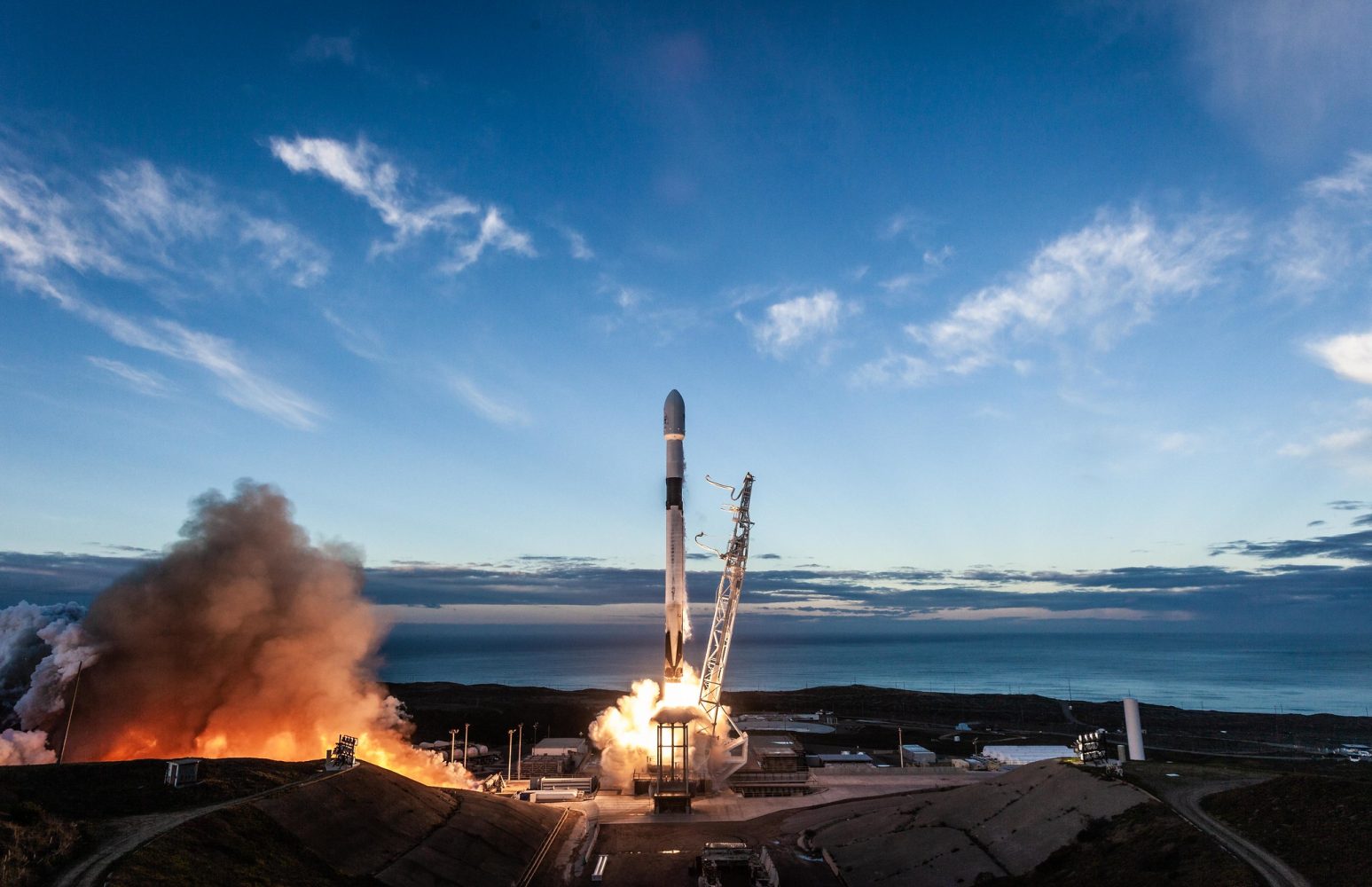
NASA‘s Imaging X-ray Polarimetry Explorer (IXPE) will launch this week on a SpaceX Falcon 9 rocket. Initially, it was assigned to fly on a Northrop Grumman Pegasus rocket, but it was moved to SpaceX to save on launch costs. IXPE’s three identical telescopes will study the polarization of cosmic X-rays. Its mission will be to map out the magnetic fields of black holes, neutron stars, pulsars, supernova remnants, magnetars, quasars, and active galactic nuclei. The total cost of IXPE and its two-year planned mission is $188 million.

Launch Date: Thursday, December 9, 1:00 – 2:30 a.m. EST

Expand Expanding Close

How satellites help us fight climate change

When most people think of NASA, they might picture the International Space Station, the Apollo Program, or even the Hubble Space Telescope. One oft-overlooked field of study is the space agency’s long history of looking back at our own planet. NASA-conducted climate research serves as the backbone of our current understanding of our changing climate. The space agency’s climate research relies heavily on its fleet of weather satellites, which help researchers develop accurate climate models.

Expand Expanding Close

Debris risk to astronauts pushes back planned spacewalk and ISS antenna repair to Thursday

A pair of astronauts planned to conduct a spacewalk outside of the International Space Station on Tuesday, but NASA delayed the plan to repair a faulty antenna system. The scheduled spacewalk was pushed back due to the risk of debris endangering astronauts Thomas Marshburn and Kayla Barron.

Expand Expanding Close

Hardware issue delays launch of NASA’s James Webb Space Telescope, slipping closer to Christmas Day [Update: No additional damge]

NASA announced Monday that the launch of its next-generation space telescope would move to December 22 after an issue with one of the adapter clamps caused vibrations to the observatory.


Update: NASA confirmed in a blog post that no additional damage was seen during testing.

Expand Expanding Close

Russia has put its own cosmonauts and NASA/ESA astronauts at risk after Anti-Satellite test [Updated: Statements by Nelson and Rogozin]

Monday morning, Russia conducted an Anti-Satellite (ASAT) test against one of its satellites, Kosmos 1408. Now the International Space Station is going through multiple debris field passes.


Updated with statements from NASA Administrator Bill Nelson, Roscosmos Director Dmitry Rogozin, US Space Command, and the US Department of State.

Expand Expanding Close

NASA Administrator ‘Outraged’ by Russia’s ‘reckless, dangerous’ anti-satellite test

As we reported, on Monday morning, the International Space Station residents quickly retreated to their spacecraft as the station underwent emergency procedures. A Russian anti-satellite test created a massive field of debris in orbit, putting Astronauts and Cosmonauts at risk.

Now, NASA Administrator Bill Nelson has released a statement condemning Russia’s actions.

Expand Expanding Close

New NASA OIG report shows Starship Orbital Flight Test to take place in Q2 of Fiscal Year 2022

While the report is focused on the management of NASA’s Artemis program missions, the report revealed a lot about SpaceX’s Starship timeline, Including the long-awaited Starship Orbital Flight Test to take place in Q2 of Fiscal Year 2022.


Updated to reflect the date is for the fiscal year of 2022, not the calendar year 2022. Fiscal years are one quarter ahead of the calendar year.

Expand Expanding Close