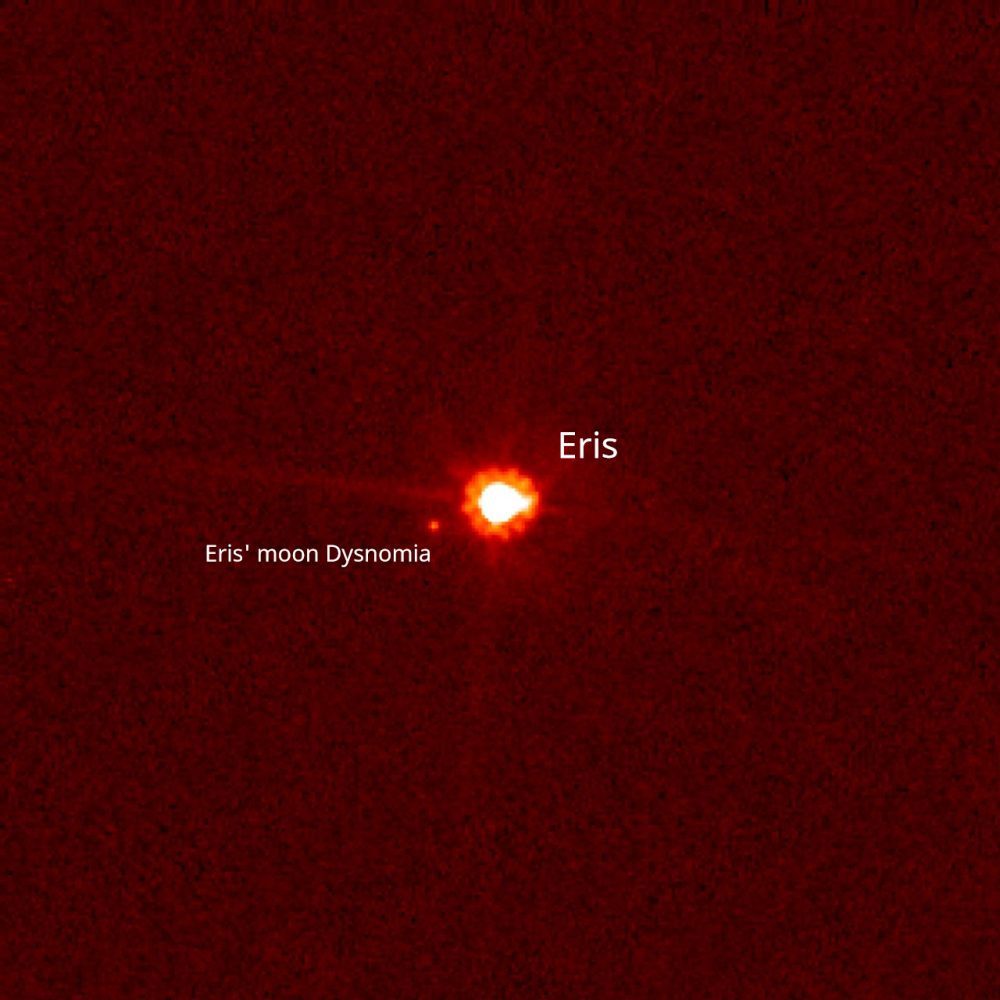
On January 5, 2005, the Palomar Observatory-based team led by Mike Brown discovered a large world, later known as Eris, after systematically scanning for large outer Solar System bodies for several years. Unfortunately for Pluto, this was the beginning of the end for its official planet title.
Currently, more than 35,000 miles away, the James Webb Space Telescope (JWST) is cruising through space on the way to its 1 million mile parking spot above the Earth. It will take the space telescope almost a month to complete orbital insertion. Here’s how you can track its way there.
FINAL UPDATE (1/31): James Webb is now fully deployed and orbiting in L2. The space telescope will spend the next few months commissioning and testing before taking its first photograph. Last week, NASA announced that Webb will point at HD 84406, a sun-like star 241 light-years away, to focus and align its mirrors in preparation for the moment we’ve been waiting for. Don’t hold your breath though, the mirror alignment process is very slow and tedious. We don’t expect James Webbs to take its first shot of the cosmos until around May 2022.
The news that no one wants to hear is a failure in one of the James Webb Space Telescope‘s deployment processes. While there isn’t a rescue plan, you bet NASA has thought about one.
Over the weekend, we finally got to watch the James Webb Space Telescope begin its journey to space. The long-awaited telescope launch was followed by celebrations from both the President and Vice-President.
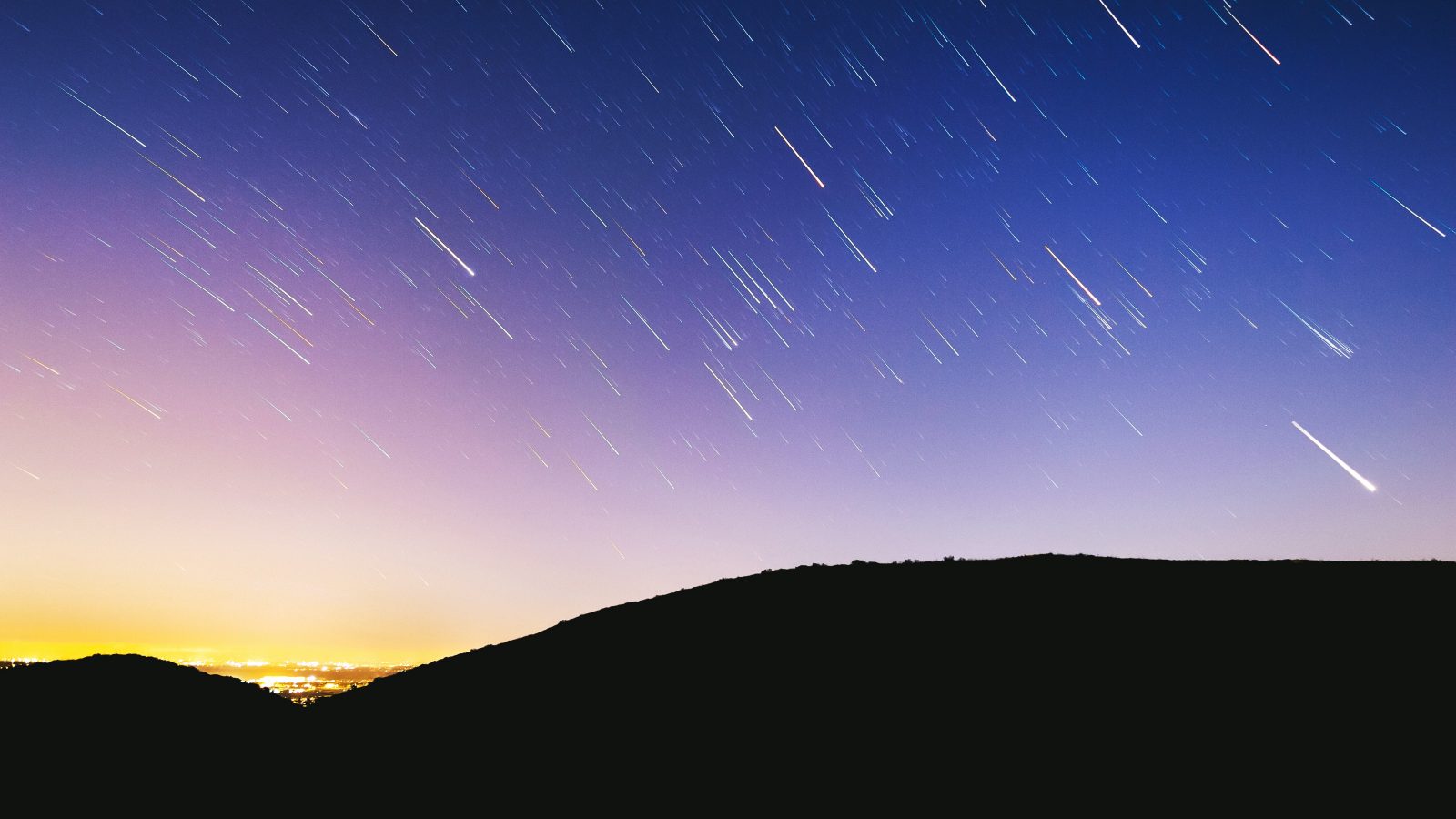
It’s Christmas week and also a good time to step outside and admire the sky for the peak of the annual Ursid meteor shower, which will grace the sky tonight. Here’s when, where, and everything you need to know.
In a full week of news, NASA is looking at LC-49 for Starship launches, Parker Solar Probe touched the Sun, and more claims of sexual harassment surfaced in the industry. Catch up on last week’s news this Monday below.
‘Oumuamua is on its way out of the solar system but that hasn’t stopped researchers from learning what they can. Some individuals are trying to see if they can make contact with it before it leaves our neighborhood.
Launched on a Delta IV Heavy rocket back in 2018, NASA’s Parker Solar Probe has now touched the Sun, flying through the Sun’s upper atmosphere – the corona.
In just a few weeks, decades of hard work will start its journey to space and begin paying dividends as NASA‘s James Webb Space Telescope finally becomes operational. Google and NASA partnered up to celebrate the launch.
Over the weekend, we got to witness a planetary gem, a total solar eclipse. Unfortunately, it took place over Antarctica, meaning the vast majority of us couldn’t see it in person, but the best view ended up coming from above.
When most people think of NASA, they might picture the International Space Station, the Apollo Program, or even the Hubble Space Telescope. One oft-overlooked field of study is the space agency’s long history of looking back at our own planet. NASA-conducted climate research serves as the backbone of our current understanding of our changing climate. The space agency’s climate research relies heavily on its fleet of weather satellites, which help researchers develop accurate climate models.
On Wednesday, Vice President Kamala Harris chaired her first meeting of the National Space Council (NSpC) of the new administration. Before this meeting, we were unsure how Biden’s NSpC would work, but it’s clear now it will continue the work President Trump forged – but now also climate change.
Earlier this year, I reviewed the eVscope eQuinox. Now, the smart telescope is $300 cheaper, down to $2,699. It may not be the latest scope from Unistellar, but not much changed between the eQuinox and the eVscope 2, so it may be worth taking this deal. Head below the fold to see if this deal is right for you!
While telescopes may not be the first thing to come to mind when you think of Black Friday savings, if you are interested in astronomy there are plenty of deals to help you get a jump start.
Stay tuned as we update this article throughout the week as more telescope deals come to light.
Late last night SpaceX launched a double asteroid redirection test mission for NASA. The ~1,300 pound spacecraft will slam into Didymos’ moonlet following its 10-month journey.
Unistellar announced its eVscope 2 back in September. The electronic telescope just needs to be connected to your phone, and then you can start admiring deep-sky objects invisible to the naked eye. It is an intriguing piece of tech, that’s for sure, but does it live up to its eye-watering $4,199 price tag (plus $59 shipping)?
New information obtained from the Juno mission has unveiled the atmospheric processes behind Jupiter’s stripes, polar cyclones, and even the Great Red Spot.
At COP26, a climate conference, Jeff Bezos pledged $2 billion of the $10 billion Bezos Earth Fund to be dedicated for land restoration and food production. While speaking on the matter he cited how much seeing Earth from space changes the way in which you view the planet.
Astronomers have discovered a new astronomical phenomenon in which a white dwarf star has been switching “off and on,” with its brightness abruptly dimming and intensifying in just 30 minutes.
Students across Alabama have been working on being the first student-built CubeSat to leave low-Earth orbit. Now that dream is no more after NASA dropped secondary payloads from the Artemis II mission. Thus, forcing the Alabama Space Grant Consortium that leads the project to pivot its design.
Astronomers recently discovered a unique radio wave emitted from the direction of the heart of the Milky Way. The unique way in which the polarization of the waves rotates, as well as the variation in brightness, doesn’t closely match what the astronomers expect of other known celestial objects.
Tonight, October 8, is the peak of October’s Draconid meteor shower, also known as Giacobinids. This is a smaller meteor shower than some, but could certainly be worth a look!