
NASA – National Aeronautics and Space Administration

See All Stories

A world-wide space leader

On October 4, 1957, the Soviet Union launched the world’s first satellite into orbit. While it was a dummy payload, with very few scientific or military instruments on board, it stroke fear to non-communist countries around the world.

On the other side of the world, what was believed to be the Western Super power, the United States, was struggling to keep up with the Soviet Union. So in 1958, Congress drafted and approved the National Aeronautics and Space Act. It was then signed into law by President Dwight Eisenhower on July 29, 1958. With that, the National Aeronautics and Space Administration was created.
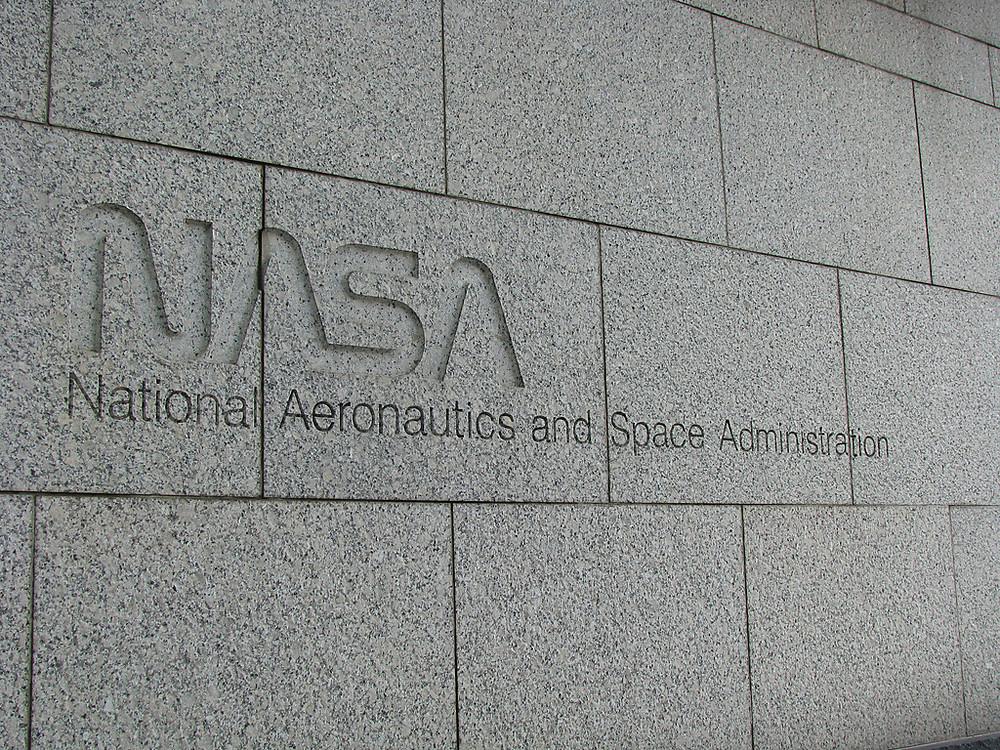
NASA’s goal since then has been to develop new technologies for both use in our atmosphere and in space. It was also designed to lead the nations new civil space program in openness, a contrast to the Soviet Union.

Since then the agencies has grown and now leads the world in both funding and number of projects it can run. NASA has become the organizer of other space agencies to collaborate to do bigger things than what we could do on our own, as well as be the champion of commercial space applications. (Sometimes.)

NASA is headquartered in Washington DC, and the current interim administrator is Secretary of Transportation Sean Duffy.

Space Exploration

Since the agencies beginning, space exploration has been NASA’s primary mission. Beginning with Project Mercury, to Gemini, Apollo, the Space Shuttle, and now Artemis, NASA leads the world in expanding exploration of space.

International Space Station

Arguably the largest ongoing space mission that NASA is involved in is the International Space Station (ISS). The ISS is a habitable modular space station involving five space agencies: NASA, Roscosmos, JAXA, ESA, and CSA. Construction of the orbital laboratory began on November 20, 1998.

NASA’s four enduring strategic goals are as follows:

  • Expand human knowledge via new scientific discoveries
  • Extend human presence deeper into space for sustainable, long-term utilization
  • Address national issues and catalyze economic growth
  • Optimize capabilities and operations

The Artemis Program

Currently, NASA’s major space exploration program is a daring adventure to return humanity to the Moon. The plan consists of the agency’s SLS rocket and Orion space capsule. The program originally started as a fully public program but has since switched over to using the growing commercial space sector to help develop parts of the program.

Artemis consists of multiple programs and contracts to meet its goal of returning humanity back to Moon sustainably and to stay this time. To do that, NASA has taken a big bet that in the future there will be a commercial market for access to the Moon.

NASA developed the primary launcher for crew, SLS and Orion, while it has partnered with the commercial industry for everything else. Contracts have been signed for NASA to purchase lunar landers, spacesuits, rovers, and resupply services commercially rather than owning the systems itself.

Eventually, NASA could be just one of many customers served by these services it helped create.

NASA Ames mandating telework after employee tested positive for coronavirus

Last week NASA conducted a nationwide voluntary telework test run to discover technological and connectivity issues before a theoretical mandate is required.

Over the weekend, a NASA employee at Ames Research Center in Silicon Valley tested positive the coronavirus. As a precaution, NASA Administrator Jim Bridenstine has placed the facility on “mandatory telework status with restricted access to the center until further notice.”

Here’s the administrator’s full statement:

Expand Expanding Close

Watch: NASA revealing new student-submitted Mars rover name [Update: Revealed]

Curiosity isn’t the only Martian rover making headlines this week. NASA will soon reveal the name of its next Mars rover at a special event held today at 1:30 p.m. ET.

NASA opened name submissions to K-12 students in U.S. public, private, and home schools last August before choosing nine finalists. The agency then conducted an online poll to let the public vote on their favorite name among the top finishers:

Expand Expanding Close

NASA testing remote work strategy this week over COVID-19 concerns

NASA isn’t requiring employees work remotely over coronavirus COVID-19 concerns yet, but the administration is conducting a test this week to determine how such an event would work if the federal government mandated such a thing.

Jacqueline Feldscher, reporting for POLITICO:

All NASA employees and a number of Air Force personnel have been asked to work from home on Friday amid federal preparations for a potential coronavirus outbreak, according to a NASA spokesperson and an Air Force memo obtained by POLITICO.

The day will allow employees to test remote work technologies in case federal employees are forced to work from home for an extended period of time due to the virus.

NASA spokesperson Bettina Inclán provided this statement on the upcoming test:

Expand Expanding Close

Artemis lunar mission boosting public and investor support, says Morgan Stanley Space Team

Turns out investment bank Morgan Stanley has a dedicated Space Team, and they’re awfully jazzed about the impact NASA’s Artemis Moon mission is having on public and investor support in the companies like Virgin Galactic.

The Morgan Stanley Space Team advises that “increased news flow around space tourism could catalyze itself in increasing awareness to a larger breadth of investors being interested in Virgin Galactic,” specifically citing the firm for being the only pure-play publicly traded space tourism company.

Virgin Galactic recently shared its first full year of earnings results as a publicly traded company and made steps toward making space tourism possible. SpaceX similarly has ambitions to build a business out of taking private citizens to space for longer durations than Blue Origin.

NASA’s Artemis mission to put the first woman and next man on the Moon by 2024 is credited for driving public awareness of space activity, and the investment firm believes consumers will associate Virgin Galactic with human spaceflight innovation “as the business shifts from a niche experience catering to high net worth individuals to investing in more applications in space.”

Expand Expanding Close

Flashback: SpaceX in 2012 vying for NASA commercial crew contract post Space Shuttle

Elon Musk’s 60 Minutes interview with Scott Pelley on CBS in 2012 has aged remarkably well for SpaceX.

Two things stand out. Falcon 9 and Dragon were only just preparing to begin cargo delivery to the International Space Station — something that’s now routine.

And Elon was dreaming of SpaceX succeeding the Space Shuttle for taking astronauts to space from American soil. Eight years later and that day has nearly arrived.

Expand Expanding Close

NASA believes super pressure balloons can replace launching rockets in space for some research

NASA’s Balloon Program Office believes its super pressure balloons can be used for scientific research that would otherwise require launching a rocket into space.

The next NASA super pressure balloon launch should happen around mid-April with the primary goal of “validating and certifying the super pressure balloon as an operational flight vehicle,” according to the program’s chief Debbie Fairbrother.

Expand Expanding Close

NASA’s InSight lander captures over 400 Mars quakes, measures ancient rock magnetism

NASA’s InSight Mars lander touched down one year ago after a six month journey from Earth to the Red Planet. Today six papers were published with a year of science learned through year one of the lander mission.

A new understanding of Mars is beginning to emerge, thanks to the first year of NASA’s InSight lander mission. Findings described in a set of six papers published today reveal a planet alive with quakes, dust devils and strange magnetic pulses.

Five of the papers were published in Nature. An additional paper in Nature Geoscience details the InSight spacecraft’s landing site, a shallow crater nicknamed “Homestead hollow” in a region called Elysium Planitia.

InSight is equipped to detect Mars quakes, wind speed, air pressure, and more.

Expand Expanding Close

NYT: Julius Montgomery, Who Broke a Space-Age Race Barrier, Dies at 90

Julius Montgomery is another name history will remember for an extraordinary life lived. Katharine Q. Seelye recently profiled his accomplishments in The New York Times following his passing:

In 1956, he had become the first African-American who was not a janitor to be hired to work at the Cape Canaveral space facility in Florida. He was part of a team of technical professionals, known as “range rats,” who repaired the electronics in malfunctioning ballistic missiles and satellite equipment.

Two years later, his team wanted to start a school to keep the space workers up-to-date. Brevard Engineering College, as it was to be called (Cape Canaveral is in Brevard County), planned to lease classrooms at a public junior high school near the space center.

America’s ugly history with racism got in Montgomery’s way, however, when he applied to attend the college. He selflessly stepped aside so the college could open.

Expand Expanding Close

Celebrating Katherine Johnson, NASA research mathematician, who died at 101

Katherine Johnson’s work dates back to NACA (National Advisory Committee for Aeronautics) in 1953 before there was ever a NASA.

The NASA research mathematician’s life is memorialized in the 2016 film Hidden Figures which follows “a team of female African-American mathematicians who served a vital role in NASA during the early years of the U.S. space program.”

Johnson died today at the incredible age of 101, leaving behind a legacy that will inspire generations for centuries.

Expand Expanding Close