NASA – National Aeronautics and Space Administration

See All Stories

A world-wide space leader

On October 4, 1957, the Soviet Union launched the world’s first satellite into orbit. While it was a dummy payload, with very few scientific or military instruments on board, it stroke fear to non-communist countries around the world.

On the other side of the world, what was believed to be the Western Super power, the United States, was struggling to keep up with the Soviet Union. So in 1958, Congress drafted and approved the National Aeronautics and Space Act. It was then signed into law by President Dwight Eisenhower on July 29, 1958. With that, the National Aeronautics and Space Administration was created.
NASA’s goal since then has been to develop new technologies for both use in our atmosphere and in space. It was also designed to lead the nations new civil space program in openness, a contrast to the Soviet Union.

Since then the agencies has grown and now leads the world in both funding and number of projects it can run. NASA has become the organizer of other space agencies to collaborate to do bigger things than what we could do on our own, as well as be the champion of commercial space applications. (Sometimes.)

NASA is headquartered in Washington DC, and the current interim administrator is Secretary of Transportation Sean Duffy.

Space Exploration

Since the agencies beginning, space exploration has been NASA’s primary mission. Beginning with Project Mercury, to Gemini, Apollo, the Space Shuttle, and now Artemis, NASA leads the world in expanding exploration of space.

International Space Station

Arguably the largest ongoing space mission that NASA is involved in is the International Space Station (ISS). The ISS is a habitable modular space station involving five space agencies: NASA, Roscosmos, JAXA, ESA, and CSA. Construction of the orbital laboratory began on November 20, 1998.

NASA’s four enduring strategic goals are as follows:

  • Expand human knowledge via new scientific discoveries
  • Extend human presence deeper into space for sustainable, long-term utilization
  • Address national issues and catalyze economic growth
  • Optimize capabilities and operations

The Artemis Program

Currently, NASA’s major space exploration program is a daring adventure to return humanity to the Moon. The plan consists of the agency’s SLS rocket and Orion space capsule. The program originally started as a fully public program but has since switched over to using the growing commercial space sector to help develop parts of the program.

Artemis consists of multiple programs and contracts to meet its goal of returning humanity back to Moon sustainably and to stay this time. To do that, NASA has taken a big bet that in the future there will be a commercial market for access to the Moon.

NASA developed the primary launcher for crew, SLS and Orion, while it has partnered with the commercial industry for everything else. Contracts have been signed for NASA to purchase lunar landers, spacesuits, rovers, and resupply services commercially rather than owning the systems itself.

Eventually, NASA could be just one of many customers served by these services it helped create.

Crew-2: NASA and SpaceX targeting 4/20 for next astronaut launch to space station

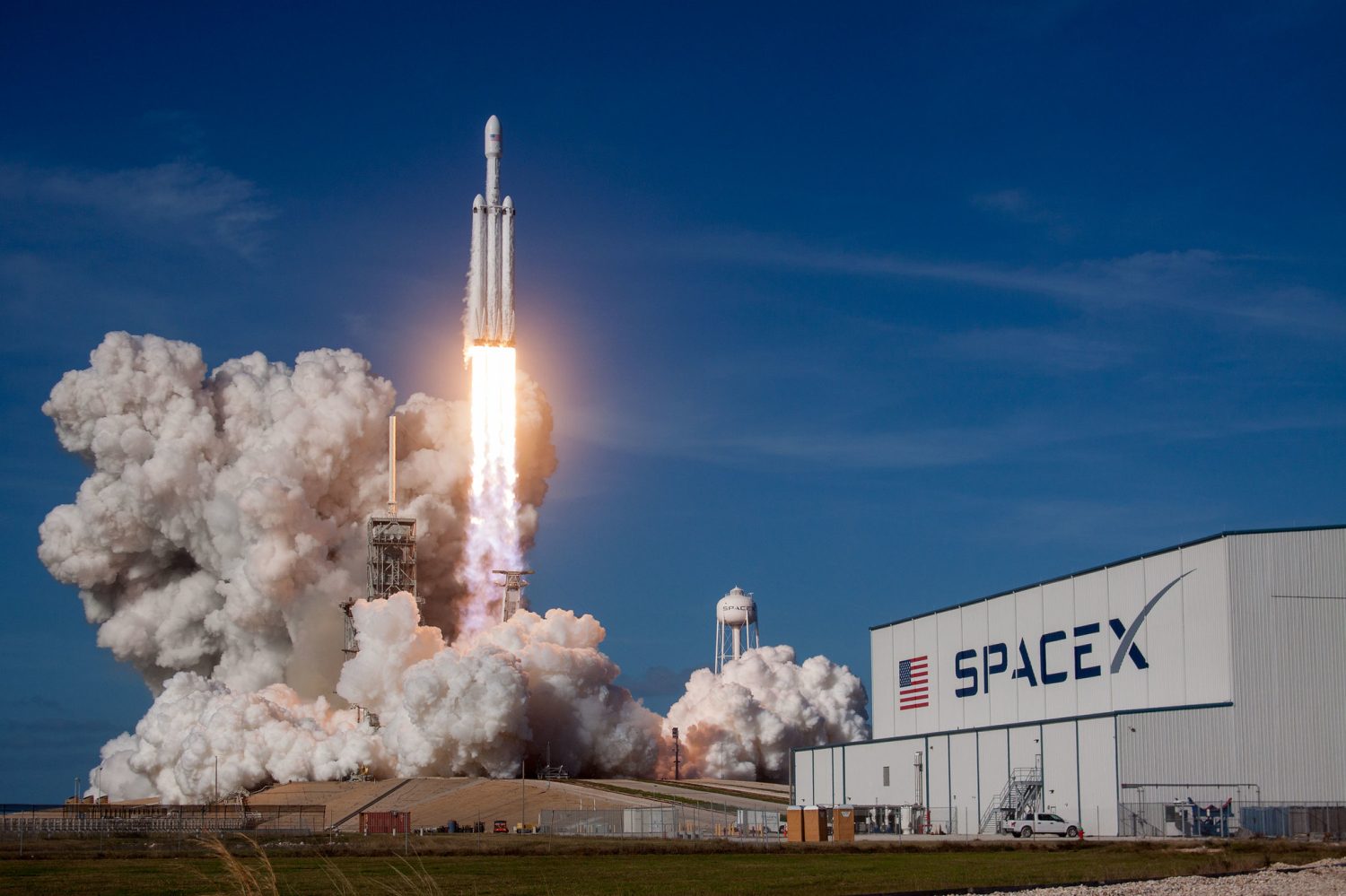
SpaceX will conduct its third mission to send astronauts to space on April 20 from Launch Complex 39A at Kennedy Space Center in Florida. A Falcon 9 rocket and Crew Dragon spacecraft will send two NASA astronauts, one JAXA astronaut, and one ESA astronaut to the International Space Station. The mission called Crew-2 will be the first SpaceX flight for a European Space Agency astronaut and the second for a Japan Aerospace Exploration Agency astronaut.

Expand Expanding Close

NASA and Boeing set new date for second Starliner test ahead of astronaut missions

Boeing is positioned to start flying astronauts to the International Space Station for NASA as soon as this year, but the Starliner spacecraft must complete an orbital flight test without crew. NASA and Boeing now have a new date set for when the OFT-2 mission will be conducted. If successful, Boeing’s Starliner will join SpaceX’s Crew Dragon in transporting astronauts from the U.S. to the ISS for NASA’s Commercial Crew program.

Expand Expanding Close

SLS: NASA says aborted hot fire test met several goals of the test and clarifies cryo-cycling concern

After the SLS Core Stage hot fire test that aborted just over a minute into the test, it was uncertain what objectives were met and if they would need to do a second test fire. During the second press conference Tuesday afternoon, concerns arose about the Core Stage reaching its cryo-cycling limit before the launch but today NASA shares the Core Stage and Artemis 1 timeline may be in better shape than first thought.

Expand Expanding Close

Why did Space Launch System’s Green Run hot fire test abruptly end early? NASA can explain …

NASA released a statement this week detailing information about some of the findings that contributed to the early shutdown of the Artemis 1 Core Stage during the Green Run Hot Fire test on Saturday. The test was originally supposed to last about 8 minutes, but ended up only lasting 67.2 seconds, far short of the minimum amount of time needed to certify the core.

Expand Expanding Close

[UPDATED] NASA’s upgraded mobile launcher for larger Space Launch System rocket moving forward

NASA recently submitted a permit detailing facility construction and modification plans to support its next Mobile Launch Platform for Space Launch System, the agency’s nearly complete rocket to the Moon. We first have to go back to where SLS all started with the Constellation program to understand why NASA is building a new Mobile Launch Platform.

The current Mobile Launcher, ML-1, was initially built for the Constellation program between 2009 and 2010. When the Constellation program was canned in October 2010, NASA started reworking ML-1 to support their new program for the Space Launch System. With the increased complexity and weight of SLS, issues quickly began to arise.

Expand Expanding Close

SLS: Green Run engine test ends early, likely pushing back first Artemis Moon mission [Gallery]

NASA is returning astronauts to the Moon for the first time since the Apollo program ended in the 1970s, but first the space agency must develop a new rocket capable of reaching lunar orbit. Space Launch System is that rocket, and it’s been in development for several years.

Over the weekend, NASA’s Stennis Space Center in South Mississippi conducted a critical engine test on the core stage of Space Launch System and its four RS-25 engines. While these engines aren’t new — they actually date back to use on the space shuttle — but being configured on a rocket to the Moon is untested.

The epic engine test wasn’t a total success, however, as the vehicle detected an anomaly and stopped firing its engines well before the required test duration. The good news is NASA says both the rocket core stage and its engines remain in good shape.

Expand Expanding Close

Virgin Orbit successfully launches rocket to space from wing of a 747 plane in milestone mission

Virgin Orbit attempted its second demonstration launch on Sunday after their first attempt failed shortly after the first stage ignition last year. This time around they didn’t just launch a mass simulator but actual payloads from NASA’s Educational Launch of Nanosatellites program ElaNa 20 which contained several CubeSats from universities across the nation.

Expand Expanding Close

What is the Artemis program and how will it take us back to the Moon and beyond?

Signed on the 45th anniversary of the final crewed mission to the Moon, Space Policy Directive 1 directed NASA to begin a mission to send the next man and first woman to the Moon with a pathway to continue onto the crewed exploration of Mars. Since then, the Artemis program has expanded to include already existing programs as well as new commercialized contracts for new services.

Expand Expanding Close

Apple TV+ premieres tense ‘For All Mankind’ season 2 trailer in which NASA combats DOD militarization

How would history divert from reality if the United States had lost the Space Race to the Soviet Union in the 1960s? Ronald Moore’s “For All Mankind” on Apple TV+ explores an alternative timeline in which America is second to the Moon in season one of the sci-fi series.

“We’re concerned the Soviets might be trying to introduce a new weapon.” That’s how the alt history storyline picks up in the midst of a Cold War escalation during the 1980s in season two. Today we have the most detailed look at what unfolds next as NASA struggles with a takeover by the Department of Defense.

Expand Expanding Close

NASA InSight’s mole probe sadly fails to dig into the Martian surface

NASA’s InSight lander was launched back in 2018 from Vandenberg Air Force Base on an Atlas V rocket and was the first interplanetary mission from California. The lander made it safely to the surface of Mars on November 26, carrying new experiments to learn more about Mars subsurface science.

The two big experiments that took the ride to the Red Planet were a seismometer and “self-hammering nail” to study the thermal properties below the surface of Mars nicknamed “the mole”. The mole ran into problems almost right away after it was lifted off the top of the lander and placed on the ground in late 2019.

Expand Expanding Close

What is NASA’s CLPS program?

NASA has had the goal over the years to grow the commercial space market by moving design, development, and operations of spacecraft over to commercial partners rather than the government agency. Instead of NASA being the only place for researchers to go for getting payloads to space, NASA has become more of a customer of commercial spacecraft providers

Expand Expanding Close

With Arecibo’s collapse, some scientists want to build its replacement on the Moon

2020 ended on a low note for the scientific community as the Arecibo Observatory collapsed in early December. However, this event has reinvigorated the discussion around NASA’s proposed Lunar Crater Radio Telescope (LCRT). Some scientists have even suggested that an LCRT on the Moon’s far side could act as a better replacement for Arecibo.

Expand Expanding Close

Joe Biden was ‘indebted’ to Stennis in 1985, now he should rename NASA’s space center in Mississippi

Joe Biden will become the next President of the United States on January 20, and the space community has questions. What does the new administration have planned for NASA’s Artemis program, how will the new commander-in-chief direct the U.S. Space Force, and will the Trump-revived National Space Council continue?

Another question to ask is how will a President Biden approach revisiting government facilities named after those with whom we do not share values. Biden will preside over renaming 10 military bases named after Confederate generals. This change gained bipartisan in Congress at the end of last year. What did not gain bipartisan support in 2020 is support for renaming NASA’s Stennis Space Center.

Expand Expanding Close

NASA developing lunar navigation architecture for its upcoming Artemis missions

Preparations for NASA’s Artemis program are in full swing as the first mission, Artemis I, is set to launch later this year. However, one crucial part of the program that still requires a solution is navigation architecture. With extended stays on the moon, humans and autonomous robots alike would benefit greatly from having a system similar to GPS available.

Expand Expanding Close