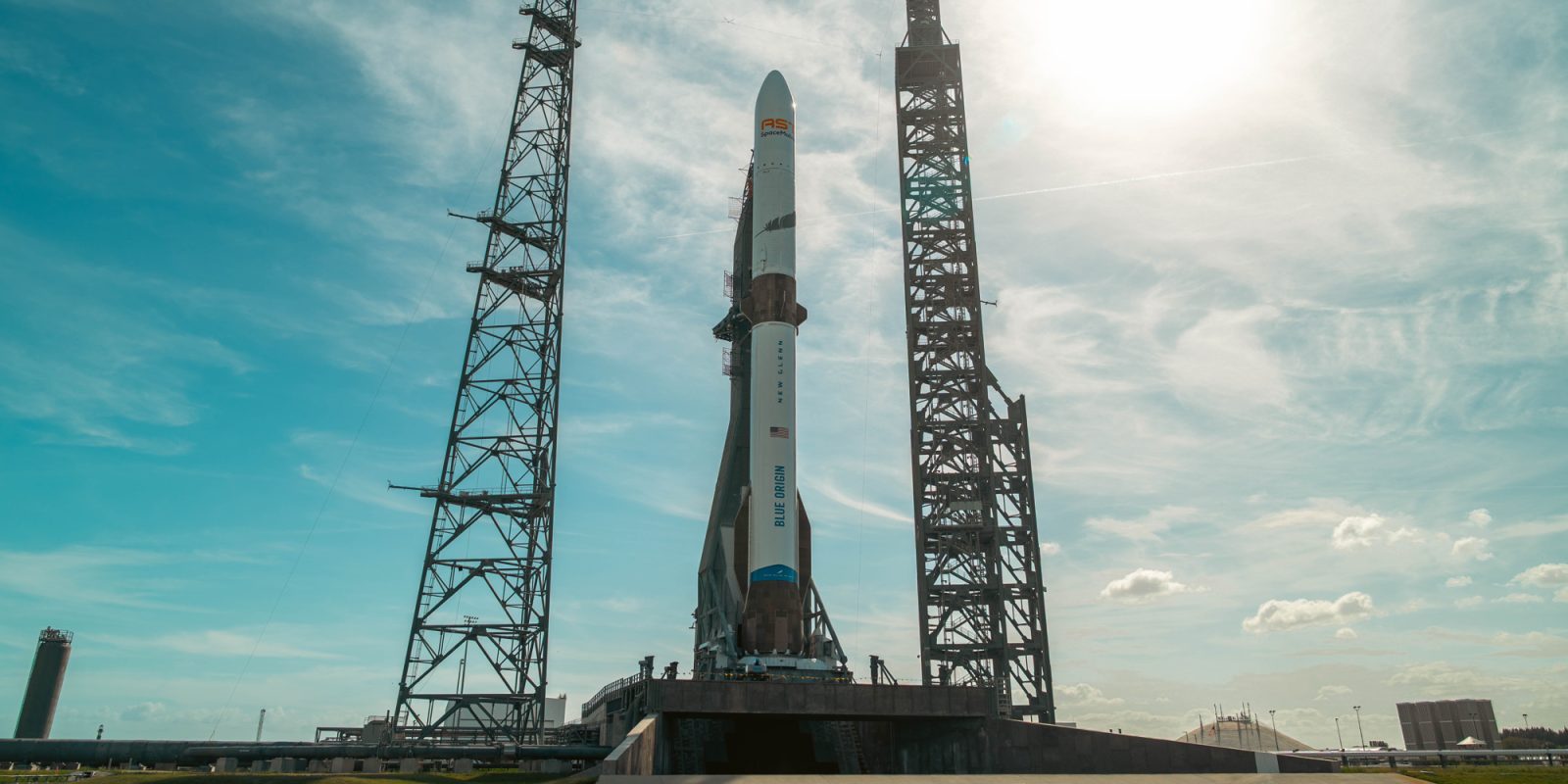
Blue Origin’s New Glenn rocket explodes on pad, topples lightning tower [Update: No injuries]


Solid state batteries are considered the “holy grail” of technology for electric vehicles, but it has been hard to development on a large enough scale to be viable. Solid Power in Colorado is attempting to change that.
Expand Expanding Close
A couple of weeks ago, NASA announced a cadre of astronauts selected to participate in the agency’s Artemis program. Those same astronauts will now get the opportunity to test out the Orion spacecraft hardware with a new simulator that recently arrived at the Johnson Space Center in Houston.
Expand Expanding Close
On the morning of December 21, 1968, a 36-story-tall Saturn V rocket towered over Cape Kennedy, now known as Cape Canaveral. Thousands of onlookers gathered to view the historic event on the nearby beaches. Sitting atop the lumbering Saturn V was the Apollo 8 spacecraft, ready to carry the first humans around the moon.
Expand Expanding Close
NASA has released tips for how to take photos of the Christmas Star, otherwise known as the Jupiter and Saturn “Great Conjunction”, tonight as it reaches its peak for how close they will appear.
Expand Expanding Close
After a few weeks of trial and error, NASA says it has completed the wet dress rehearsal test step for the core stage of Space Launch System, the agency’s rocket to the Moon and beyond. This is the final step before NASA and Boeing engineers fire the core stage in place for eight minutes to collect data.
Expand Expanding Close
Victor Glover, a NASA astronaut and current resident of the International Space Station, spent time taking questions from students about training to be an astronaut and what it is like living and working in space.
Expand Expanding Close
Saturday evening was an eventful one for the International Space Station. Over the weekend, the ISS robotics team completed the “cold” installation of the Bishop Airlock, the first commercially funded airlock to reach the space station. The Nanoracks-built airlock arrived in the trunk of SpaceX’s Dragon capsule as part of the recent CRS-21 resupply mission.
Expand Expanding Close
There’s a great space debate happening over how U.S. policy toward China should be handled when the Biden administration takes office next month. Should NASA work in cooperation with China’s space agency if the other nation is willing, or should China’s progress in space be viewed as competition?
Expand Expanding Close
Lockheed Martin has announced plans to acquire Aerojet Rocketdyne in a deal worth $4.4 billion. Lockheed expects the acquisition to close in the second half of 2021. Lockheed Martin is the prime contractor for NASA’s Orion spacecraft to send astronauts to the Moon. Aerojet Rocketdyne provides the RS-25 and RL-10 engines on NASA’s Space Launch System.
Expand Expanding Close
Space Explored’s Zac Hall and Seth Kurkowski unpack the last week in launches from SpaceX’s SXM-7 mission to Astra’s first rocket reaching space, the latest status update on Space Launch System and the Artemis I mission around the Moon, Canada’s plans to send the first Canadian astronaut to the Moon, Space Force naming its members and gaining its first astronaut, three Crew-3 astronauts being named, updates on Amazon’s Project Kuiper and Blue Origin’s New Glenn Rocket, and much more.
The United States Space Force made a rather significant announcement today, stating that its members will officially be called Guardians. The naming consensus was reached after a year-long process involving hundreds of submissions.
Expand Expanding Close
The United Launch Alliance (ULA) has announced that a Delta II rocket display will soon be coming to the Kennedy Space Center Visitor Complex. The rocket, which flew its last mission in 2018, will stand as a tribute to its almost 30 years of service.
Expand Expanding Close
On November 15, at 7:27 p.m. EST, an international crew of astronauts launched from Kennedy Space Center in Florida. The mission was called Crew-1, and onboard was Michael Hopkins, Victor Glover, Shannon Walker, and Soichi Noguchi, all headed to the International Space Station.
Expand Expanding Close
Videos and stories have been making the rounds on the internet for the past month or so, claiming that NASA has announced the Earth will go dark for six days. These claims are absolutely false; every couple of years, these same stories pop up and get passed around on social media.
Expand Expanding Close
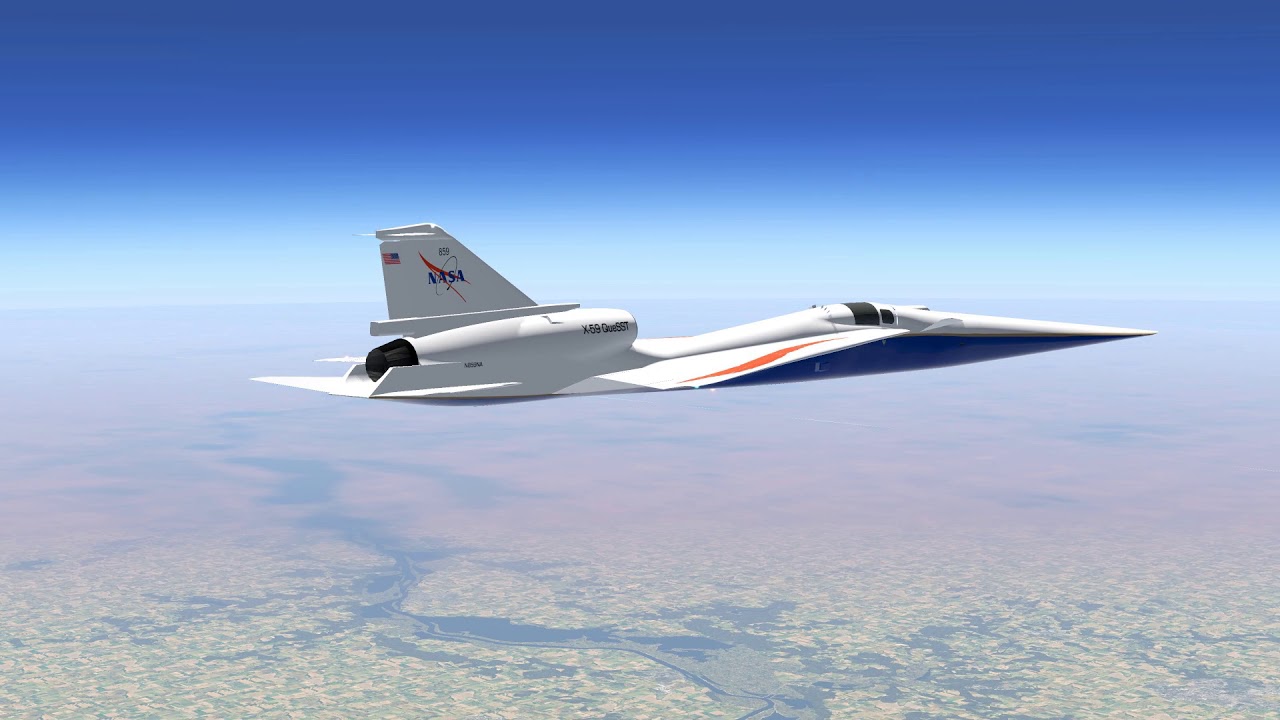
Development for NASA’s X-59 aircraft has been in full swing for the last couple of months following a pause due to COVID. Now that things are ramping up again, NASA is awarding contracts to aerospace companies to assist in the development. The latest of these contracts has just been awarded to Lockheed Martin.
Expand Expanding Close
After the launch of SpaceX’s second 7th-time-flown booster and a seemingly perfect landing, the booster returned to Port Canaveral yesterday looking well scorched (as expected) and leaning (not exactly expected). This is the second booster that has seemed to have a rougher than normal return from its landing zone in recent weeks.
Expand Expanding Close
This week the Independent Enquiry Commission (IEC), set up by ESA and ArianeSpace, released their findings and future roadmap after the loss of the VV17 mission. The launch had failed back on November 17, resulting in the loss of the two payloads on board. The loss also came on only the second flight after another Vega loss in July 2019.
Expand Expanding Close
Earlier this month it was reported that NASA’s Orion spacecraft to the Moon had a dead backup channel on a Power and Data Unit communication card. The Verge shared an internal document that showed multiple approaches to address the failed redundant channel, and the option to fully restore it was estimated to take up to a year. NASA has now issued a decision on how it will move forward with the Orion spacecraft ahead of its first uncrewed mission around the Moon.
Expand Expanding Close
Today, NASA has announced that it will be moving into the next phase of its Mars Sample Return (MSR) mission. This move would bring the mission into “Phase A,” the phase in which many crucial decisions will be made.
Expand Expanding Close
Every gamer knows that the hunt for next-gen consoles has been an extremely difficult one this year. It’s been so difficult, in fact, that some people are even willing to put their job at risk to get their hands on one, as a member of the Space Force was recently demoted for doing.
Expand Expanding Close
NASA has publicly announced that it will get behind a new Space Policy Directive that was recently issued by Donald Trump. Called Space Policy Directive-6 (SPD-6), it calls for nuclear systems to power future missions in space as well as future spacecraft.
Expand Expanding Close
US Space Command put out a press release on Wednesday, December 16, claiming that Russia had conducted a direct-ascent anti-satellite (DA-ASAT) missile test. The act continues a dangerous set of events that showcase the country’s desire to militarize space.
Expand Expanding Close
SpaceX was suppose to launch the newest satellite for the National Reconnaissance Office Laboratory named NROL-108. This will launch on booster B1059 which first launched back in December 2019 on the CRS-19 mission.
Expand Expanding Close
Amazon is one step closer to setting the stage for its planned Project Kuiper satellite internet service. The e-commerce giant revealed the design of the terminal antenna customers will use to connect the space-based internet service to their homes this week. Measuring 12-inches in diameter, Amazon touts an overall smaller terminal than legacy internet satellite antennas.
Expand Expanding Close


