NASA – National Aeronautics and Space Administration

See All Stories

A world-wide space leader

On October 4, 1957, the Soviet Union launched the world’s first satellite into orbit. While it was a dummy payload, with very few scientific or military instruments on board, it stroke fear to non-communist countries around the world.

On the other side of the world, what was believed to be the Western Super power, the United States, was struggling to keep up with the Soviet Union. So in 1958, Congress drafted and approved the National Aeronautics and Space Act. It was then signed into law by President Dwight Eisenhower on July 29, 1958. With that, the National Aeronautics and Space Administration was created.
NASA’s goal since then has been to develop new technologies for both use in our atmosphere and in space. It was also designed to lead the nations new civil space program in openness, a contrast to the Soviet Union.

Since then the agencies has grown and now leads the world in both funding and number of projects it can run. NASA has become the organizer of other space agencies to collaborate to do bigger things than what we could do on our own, as well as be the champion of commercial space applications. (Sometimes.)

NASA is headquartered in Washington DC, and the current interim administrator is Secretary of Transportation Sean Duffy.

Space Exploration

Since the agencies beginning, space exploration has been NASA’s primary mission. Beginning with Project Mercury, to Gemini, Apollo, the Space Shuttle, and now Artemis, NASA leads the world in expanding exploration of space.

International Space Station

Arguably the largest ongoing space mission that NASA is involved in is the International Space Station (ISS). The ISS is a habitable modular space station involving five space agencies: NASA, Roscosmos, JAXA, ESA, and CSA. Construction of the orbital laboratory began on November 20, 1998.

NASA’s four enduring strategic goals are as follows:

  • Expand human knowledge via new scientific discoveries
  • Extend human presence deeper into space for sustainable, long-term utilization
  • Address national issues and catalyze economic growth
  • Optimize capabilities and operations

The Artemis Program

Currently, NASA’s major space exploration program is a daring adventure to return humanity to the Moon. The plan consists of the agency’s SLS rocket and Orion space capsule. The program originally started as a fully public program but has since switched over to using the growing commercial space sector to help develop parts of the program.

Artemis consists of multiple programs and contracts to meet its goal of returning humanity back to Moon sustainably and to stay this time. To do that, NASA has taken a big bet that in the future there will be a commercial market for access to the Moon.

NASA developed the primary launcher for crew, SLS and Orion, while it has partnered with the commercial industry for everything else. Contracts have been signed for NASA to purchase lunar landers, spacesuits, rovers, and resupply services commercially rather than owning the systems itself.

Eventually, NASA could be just one of many customers served by these services it helped create.

NASA Lucy mission on track to study Trojan asteroids at Jupiter’s distance from Sun

NASA is planning to embark a spacecraft on a 12-year journey starting next year on a first-of-its-kind mission called Lucy. The Lucy spacecraft will flyby and study distant asteroids in our Solar System as part of a mission to learn more about the origins of our planet and species.

The space agency shared a status update on the upcoming Lucy mission today as the mission team passed a major milestone that puts the launch on schedule for a launch in October 2021.

Expand Expanding Close

Virgin Orbit Launch Demo 2 mission targeting late 2020, will carry 11 NASA CubeSats

Virgin Orbit will return to flight as soon as late 2020 with a second demonstration mission aimed at dropping a space-bound LauncherOne rocket from the wing of a 747 plane named Cosmic Girl. The second orbital flight test will include NASA payload this time with 11 small satellites onboard for deployment.

Expand Expanding Close

Boaters crash NASA astronaut splashdown for SpaceX mission in dangerous coordinated effort

NASA astronauts Bob Behnken and Doug Hurley helped SpaceX make history today when the duo became the first humans to splashdown in the Gulf of Mexico inside a Crew Dragon capsule. The return to Earth from the International Space Station concluded a months-long demonstration mission to certify the Falcon 9 rocket and Crew Dragon spacecraft for routine human spaceflight missions.

The first U.S. astronaut splashdown in 45 years didn’t go without an unexpected bit of turbulence however — just not for the crew of the new spacecraft. Despite a 10-mile safety zone created by the U.S. Coast Guard on behalf of NASA and SpaceX, a worrying number of boats formed a fleet of intruders around the perimeter of the splashdown site on Sunday.

NASA, SpaceX, and the Coast Guard responded to concerns about the uninvited boaters after the dangerous spacecraft splashdown and astronaut recovery effort was completed. Based on social media posts discovered after the incident, local boaters involved in the activity appear to have coordinated their arrival prior to the splashdown despite local warnings to maintain a safe distance.

Expand Expanding Close

Space Time: Mars 2020 with Scott Messer of ULA, NASA’s Dr. Lori Glaze and Dr. Thomas Zurbuchen

Space Time is a new podcast from Space Explored, part of the 9to5Mac Network.

In this Mars 2020 edition of Space Time, Zac Hall speaks with Dr. Lori Glaze (Planetary Science Division Director) and Dr. Thomas Zurbuchen (Associate Administrator, Science) of NASA, and Scott Messer (Program Manager for NASA’s Launch Service Program missions) of ULA.

Subscribe to receive new episodes every Thursday: 🟣 Apple Podcasts 🟠 Overcast 🟢 Spotify 🔴 YouTube

Expand Expanding Close

SpaceX Crew Dragon astronauts will splashdown at one of these seven sites off Florida’s coast on August 2

The next several days will be extraordinarily busy for NASA and the spaceflight industry.

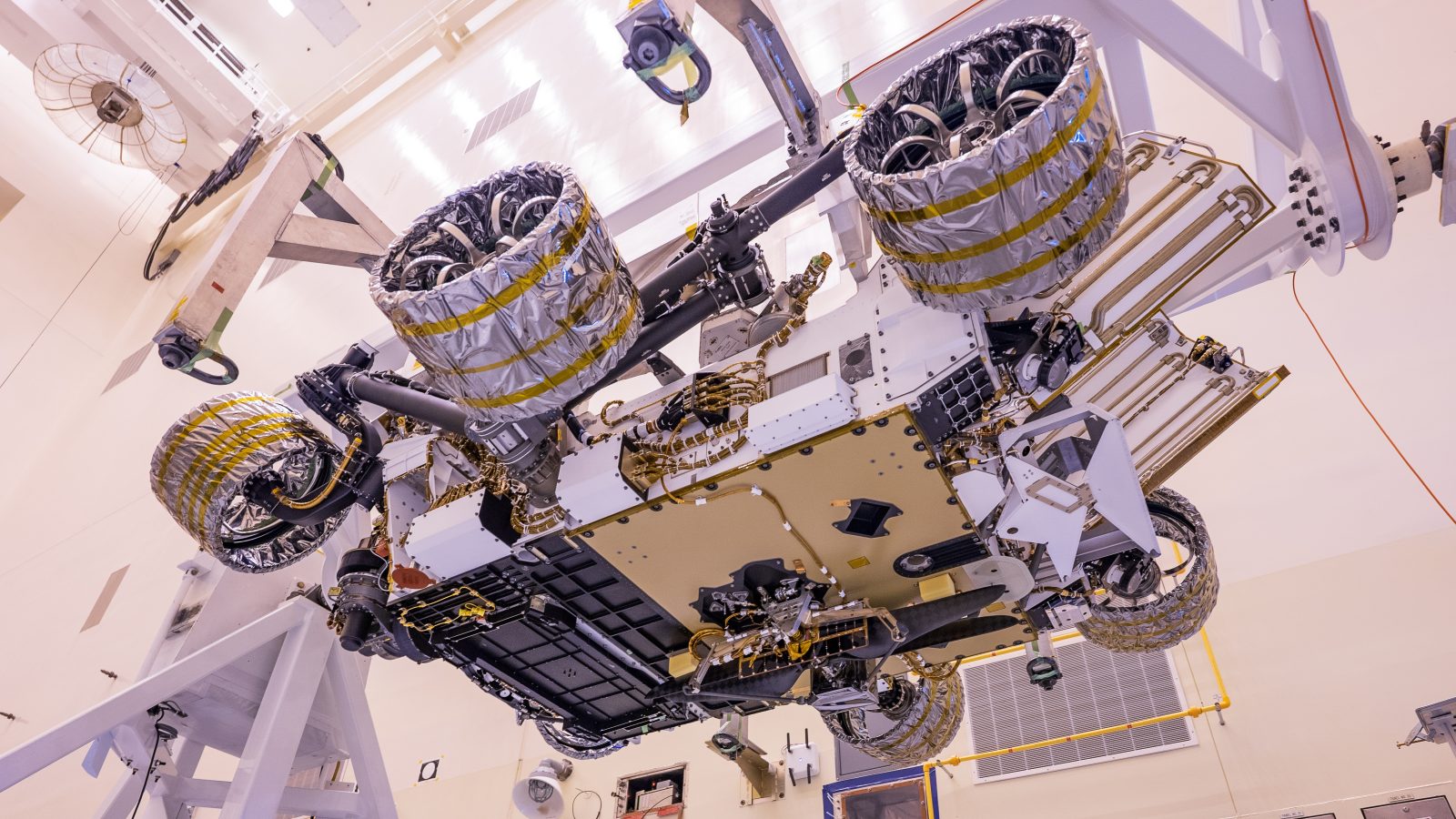
United Launch Alliance and NASA are targeting Thursday, July 30, for the Mars 2020 Perseverance rover and Ingenuity helicopter launch. Mission objectives include searching for evidence of ancient life on Mars and demonstrating helicopter flight on another planet.

Less than 24 hours later, SpaceX plans to launch its Starlink 9 mission. SpaceX routinely launches up to 60 internet satellites to build out its growing constellation for an upcoming global broadband service.

Then the two NASA astronauts who were the first humans to go to space in a SpaceX spacecraft will come home. Astronauts Doug Hurley and Bob Behnken will leave the International Space Station as soon as Saturday, August 1, and splashdown off the coast of Florida as soon as Sunday, August 2.

NASA today shared new details about how to watch the return of the astronauts currently planned for Sunday afternoon.

Expand Expanding Close

These are the closest photos ever taken of the Sun

This month NASA shared the closest images ever of the Sun’s surface obtained by a mission in partnership with the European Space Agency (ESA). The Solar Orbiter probe, which was sent into space on February 10, 2020, captured phenomena unprecedented in the Sun. The photos revealed “omnipresent miniature solar flames” near the surface of the star at the center of our solar system.

Expand Expanding Close

NASA astronauts returning to Earth from ISS in August after first crewed SpaceX launch in May

NASA astronauts Bob Behnken and Doug Hurley will depart from the International Space Center in August after becoming the first humans to ever go to space in a SpaceX spacecraft. A successful splashdown will conclude the SpaceX Demo-2 crewed flight test mission to certify the Falcon 9 rocket and Crew Dragon spacecraft for operational missions.

Expand Expanding Close

NASA building spacecraft launching in 2022 to study metal-rock asteroid Psyche

NASA is progressing toward an upcoming mission dedicated to exploring a unique asteroid called Psyche. The metal-rock asteroid orbits the Sun between Mars and Jupiter and could give us answers on how Earth was formed. The spacecraft that will be used for NASA’s Psyche mission is graduating from a design phase to manufacturing ahead of a planned launch in 2022.

Expand Expanding Close

NASA investing $51 million in hundreds of small businesses in the United States

NASA announced today that 409 proposals were selected for its Small Business Innovation Research (SBIR) and Small Business Technology Transfer (STTR) program. Phase One of the project is expected to provide $51 million for 312 small businesses in the United States.

Expand Expanding Close

Mars Perseverance rover launch shifts to July 30 after multiple hiccups, August 5 deadline extended

The window for launching from Earth to Mars opens on July 17. NASA planned to use the date to launch its newest Mars rover Perseverance tasked with finding signs of past life on Mars.

NASA associate administrator Steve Jurczyk shared on June 9, however, that the earliest date launch partner United Launch Alliance can lift off is July 20. The launch date slipped back another two days on June 24 following a “ground support systems issue identified during the packing of the spacecraft into protective fairings that go on top of the rocket.”

As of June 30, however, the current launch target is no earlier than July 30. The original launch target extended through August 5, although NASA and ULA believe they can launch as late as August 15 if needed.

Expand Expanding Close

NASA captured 10 years of the Sun, and the hour-long time lapse video is super mesmerizing

Have you ever wondered what it would be like to watch the Sun every day for 10 years? That’s what NASA’s Solar Dynamics Observatory has been doing for the past decade.

If you’re curious about the result of this mission, NASA published an epic timelapse video called “A Decade of Sun” that shows the last 10 years of the Sun in just one hour.

The result is totally mesmerizing, and the imperfections in the footage just make it all the more real.

Expand Expanding Close

Worm or Meatball? Celebrate NASA with these $8 t-shirts on sale

Target is offering a handful of NASA t-shirts on sale today for $8. You can bag free shipping on orders over $35 or just opt for curbside pickup to side-step any fees. RedCard members can save an additional 5%, bringing prices down to $7.60. Each of these shirts typically sells for $13, making it a great time to snag some new gear, especially if you’re celebrating the recent launches or any of the upcoming events planned. You might recall some of the graphics found on these t-shirts, especially if you’re into the NASA’s lauded history of graphic design. From the meatball to the iconic worm design, which is making a return, there’s something for everyone here. Browse through the entire selection for more styles, including similarly priced items for kids, too.

Expand Expanding Close

Kathy Leuders to lead human spaceflight as NASA works toward sending first woman and next man to the Moon

NASA replaced its spaceflight lead Doug Leverro in charge of human exploration just days before SpaceX sent astronauts to the space station for the first time last month. Kenneth Bowersox temporarily took the position in an acting role during the Demo-2 mission on May 30.

Today, NASA has filled the position of Human Exploration & Operations Mission Directorate in an official capacity. Kathy Leuders, who has managed Commercial Crew and Commercial Cargo programs for NASA since 2014, will now lead Human Explorations & Operations.


Expand
Expanding
Close

Astrobotic will transport NASA’s ice-studying VIPER rover to the Moon with Griffin lunar lander in 2023

The Perseverance Mars rover isn’t the only new rover in NASA’s collection of robots that will explore celestial bodies in space. The slightly more aggressively named VIPER rover will be Moon-bound in 2023.

Today NASA unveiled which company has been awarded the contract to transport VIPER to the Moon using a lunar landing system: Astrobotic. The company will receive $199.5 million for the service.


Expand
Expanding
Close

Rocket Lab launching satellite payload for NASA from New Zealand

Updates June 10-June 12:

  • Liftoff from New Zealand will be at 10:13 p.m. PT/1:13 a.m. ET.
  • Launch countdown is currently on hold due to high wind speeds in the area. The clock will recycle to T-12 minutes if weather improves.
  • Out of hold! 2:08 a.m. ET liftoff.
  • Hold again at 2:06 a.m. ET. 13 minutes left to recycle the countdown to T-12 minutes before the launch window closes until tomorrow.
  • Scrubbed due to wind speeds on first launch attempt. Next attempt will be June 13, 12:43 a.m. ET.
  • New launch target: June 13, 12:53 a.m. ET … now 1:12 a.m. ET.
  • Success!


Rocket Lab plans to launch payloads into space for three customers including NASA this week from its launch site in New Zealand. The small satellite launch service provider will use its Electron rocket to deploy satellites in Earth orbit on a mission called “Don’t Stop Me Now” as soon as Thursday, June 11.


Expand
Expanding
Close

James Webb Space Telescope launch missing March 2021 target due to COVID-19

The James Webb Space Telescope will be the “largest, most powerful and complex space telescope ever built and launched into space,” NASA says.

But preparing the giant space telescope for launch requires people, and COVID-19 severely limited the workforce at NASA for the last three months.

Given recent remote work requirements, NASA no longer believes it can launch the James Webb Space Telescope by March 2021 as previously planned.


Expand
Expanding
Close

NASA rover ‘Perseverance’ launching in July to determine if there was ever life on Mars

Current launch target:Thursday, July 30, at 750 a.m. EDT with August 15 deadline extension


Mars 2020 is the next big mission for NASA after sending the first astronauts to the space station on a SpaceX rocket. In July, NASA’s newest Mars rover named ‘Perseverance’ will launch for Mars from Cape Canaveral, Florida.

From studying signs of past life on Mars to preparing for human life, the new Mars rover will have four long-term science goals once it reaches Martian soil:


Expand
Expanding
Close

NASA selects astronaut Kate Rubins for final paid Soyuz seat to ISS

NASA astronaut Kate Rubins will fly to the International Space Station in October for a six-month mission as part of Expedition 63 and Expedition 64. Astronaut Rubins will serve as a flight engineer and space station crew member.

The flight will be recorded in history for the last Soyuz seat purchased by NASA from Russia’s space agency Roscosmos.

Expand Expanding Close

Trump relies on SpaceX milestone in reelection ad, Biden congratulates launch team [U]

President Trump and former Vice President Joe Biden are in the midst of an unconventional campaign cycle for the 2020 presidential election.

Mr. Trump, who attended the SpaceX Falcon 9 and Crew Dragon launch on Saturday, is vying for a second term in office. Mr. Biden, who has largely relied on virtual rallies during the COVID-19 pandemic, is the presumptive nominee for the party out of power.

Both presidential candidates have addressed the first SpaceX mission to send NASA astronauts to space this week.

Expand Expanding Close